AI Knowledge Graph
Platform for Enterprise Data
Intelligence
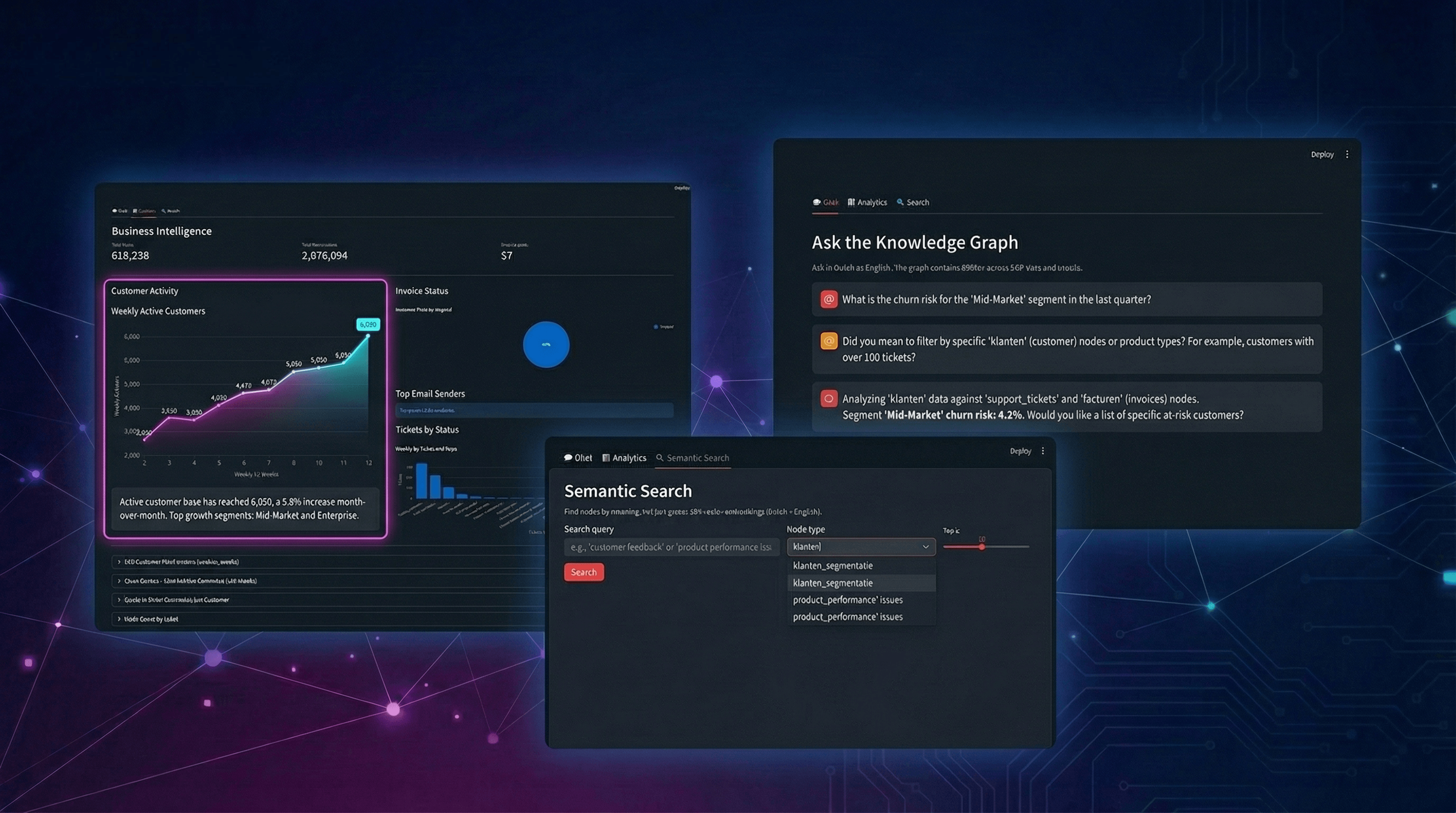
AI-powered knowledge graph platform that connects ERP systems, emails, and operational data into a unified system enabling semantic search, natural language queries, and insights.
Client Overview
Our client is a Netherlands-based manufacturing company specializing in precision laser cutting services for industrial clients. The company manages a large volume of operational data, including customer records, production orders, invoices, support tickets, and email communications.
Over time, these data sources were stored in different systems such as ERP databases and email servers. While each system served a specific operational purpose, the lack of integration between them created challenges in accessing comprehensive information about customers, orders, and support issues.
The organization needed a solution that could connect these fragmented data sources and allow employees to retrieve insights quickly without navigating multiple systems.
Technology Stack









Challenges
The client faced several operational and technical challenges related to data management and accessibility.

Fragmented Business Data
Operational data was distributed across multiple platforms including a MySQL-based ERP system and email archives. Because these systems were not connected, employees had to manually search through different tools to gather complete data about customers or support cases.

Manual Cross- Referencing
Customer support staff and sales teams often had to manually correlate orders, tickets, and emails. This process was slow and increased the chances of missing critical information.

Limited Data Insights
Traditional database queries were insufficient for extracting meaningful insights, especially when information existed across multiple systems like emails and operational records.

Complex Database Structure
The ERP database contained more than 90 tables, many of which used Dutch naming conventions and abbreviated column names. This made it difficult for non-technical staff to query the database directly.

Lack of Natural Interaction
Employees without technical knowledge could not easily query the system using natural language questions. Accessing business insights required database expertise or manual investigation.
Solutions
To address these challenges, we developed KnowledgeOS, an AI-powered knowledge graph platform that integrates structured and unstructured business data into a single intelligent system.

1. Data Integration Pipeline
We built a robust Python-based ETL pipeline that processes raw data from the client's ERP database and email systems.
The pipeline performs several tasks:
- Parsing the complete SQL database export
- Converting database tables into graph nodes
- Identifying foreign key relationships
- Importing and structuring email data
- Automatically linking emails with tickets, orders, and customers
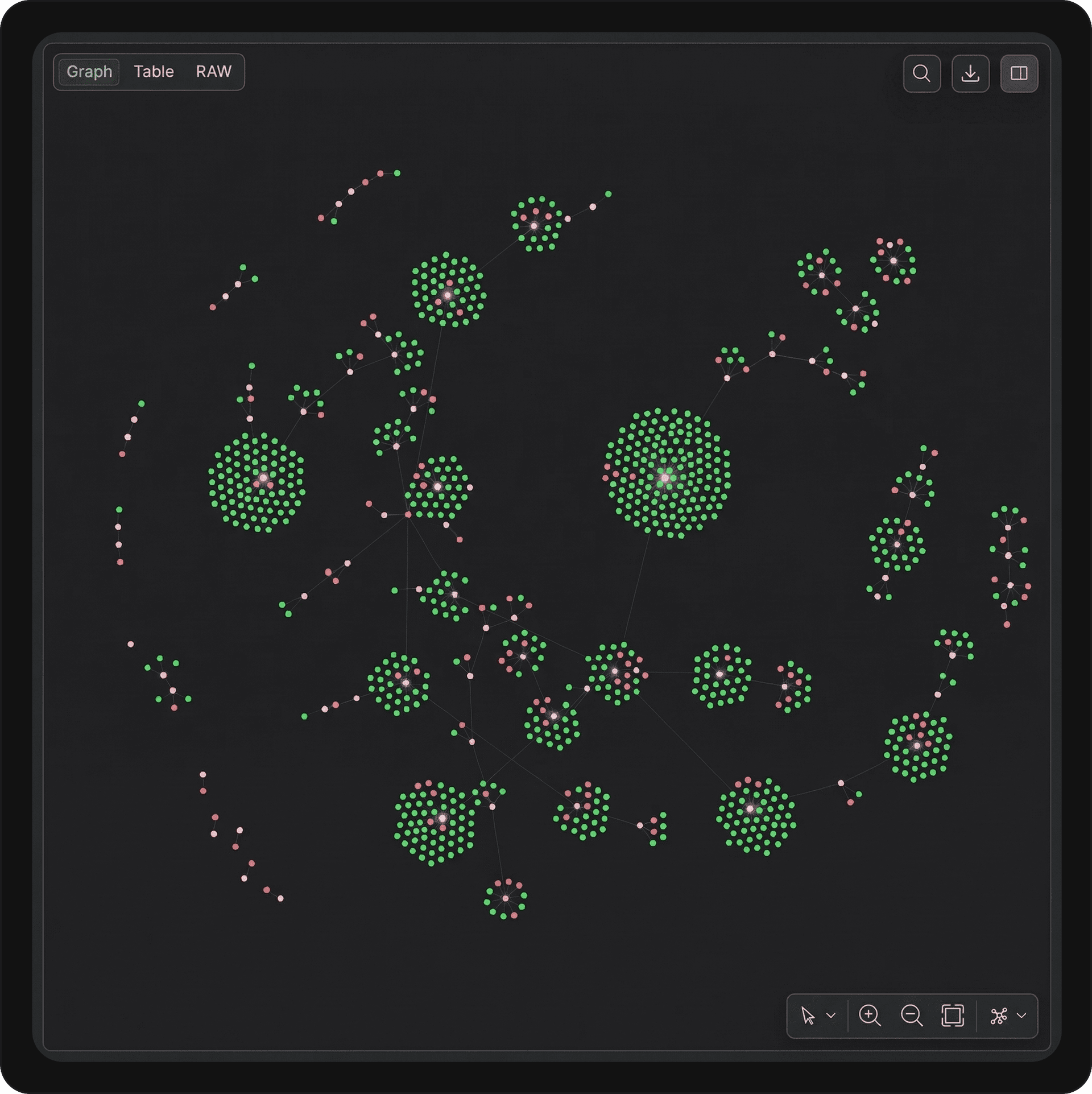
This integration resulted in a knowledge graph containing :
- 499,000+ nodes
- 576,000+ relationships
The graph structure allows the system to represent complex relationships between business entities such as customers, orders, emails, and tickets.


2. Graph-Based Data Modeling
Instead of storing data in traditional relational tables, KnowledgeOS uses a Neo4j graph database to model relationships between entities.
This approach allows the system to naturally represent connections such as:
- Customer → Orders
- Orders → Products
- Emails → Tickets
- Customers → Communications
Graph queries enable much faster exploration of interconnected data compared to traditional database joins.

3. Taxonomy and Controlled Vocabulary
To make the system understandable for AI models, we implemented a taxonomy classification layer and a controlled vocabulary mapping.
The taxonomy assigns categories to different data entities such as:
- Customer management
- Financial records
- Support tickets
- Product information
The controlled vocabulary maps Dutch database terms to English business definitions, enabling AI systems to interpret the underlying data correctly.


4. AI-Powered Natural Language Query Engine
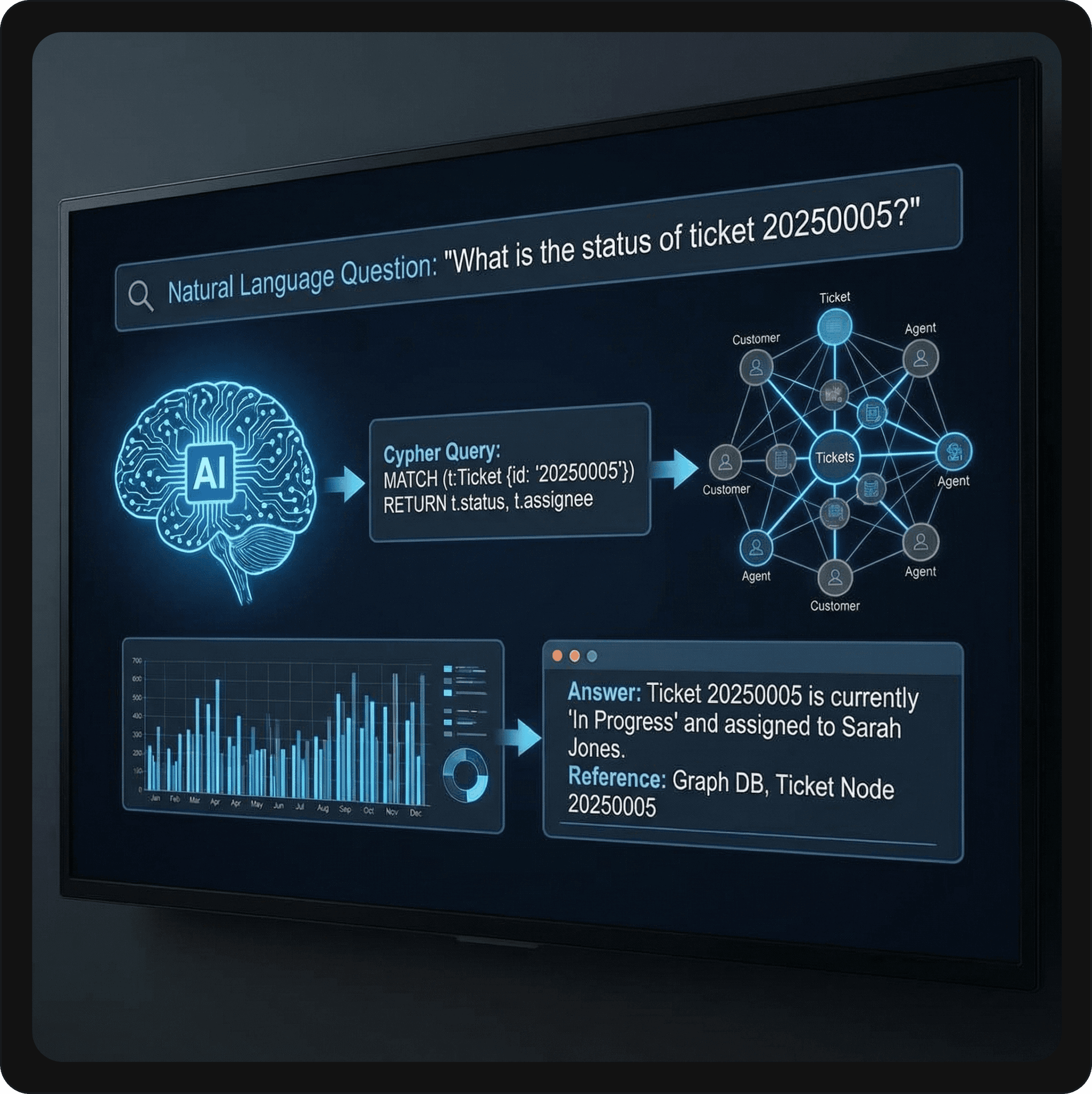
We implemented an AI-based Text-to-Cypher query engine that allows users to ask questions in plain language.
The process works as follows:
- A user enters a natural language question.
- The AI model converts the question into a Cypher query.
- The query retrieves relevant data from the graph database.
- The system generates human-readable answer with supporting references.
This enables employees to ask questions such as: "What is the status of ticket 20250005?", "Which customers sent the most support emails last month?", "Show orders related to a specific customer."

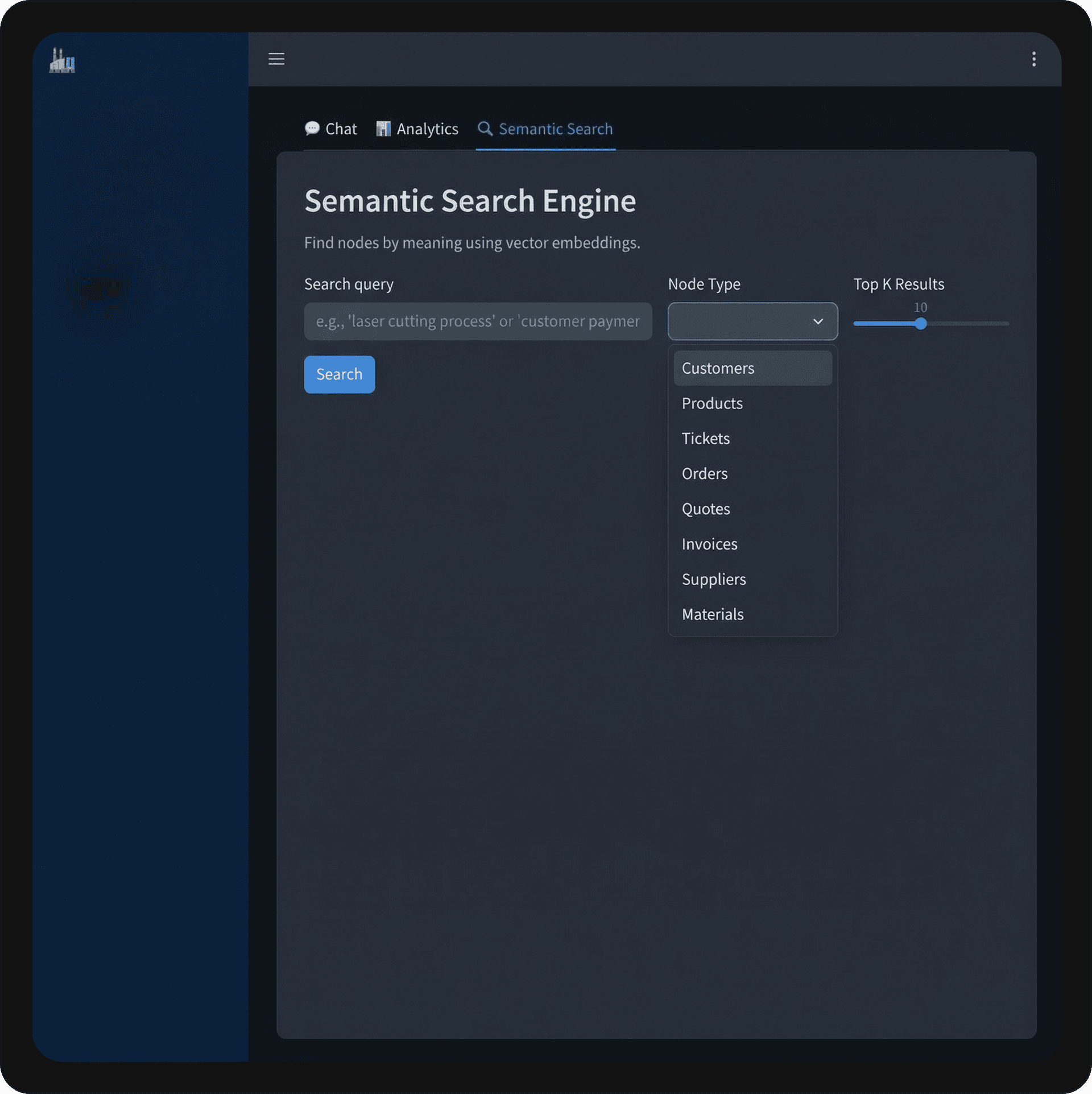
5. Semantic Search Using Embeddings
To improve search accuracy, we implemented vector embeddings that represent text data as numerical vectors.
This enables semantic search capabilities, allowing the system to identify relevant records even when exact keywords are not used. For example, queries related to "laser cutting issues" can retrieve tickets describing machine problems even if the wording differs.
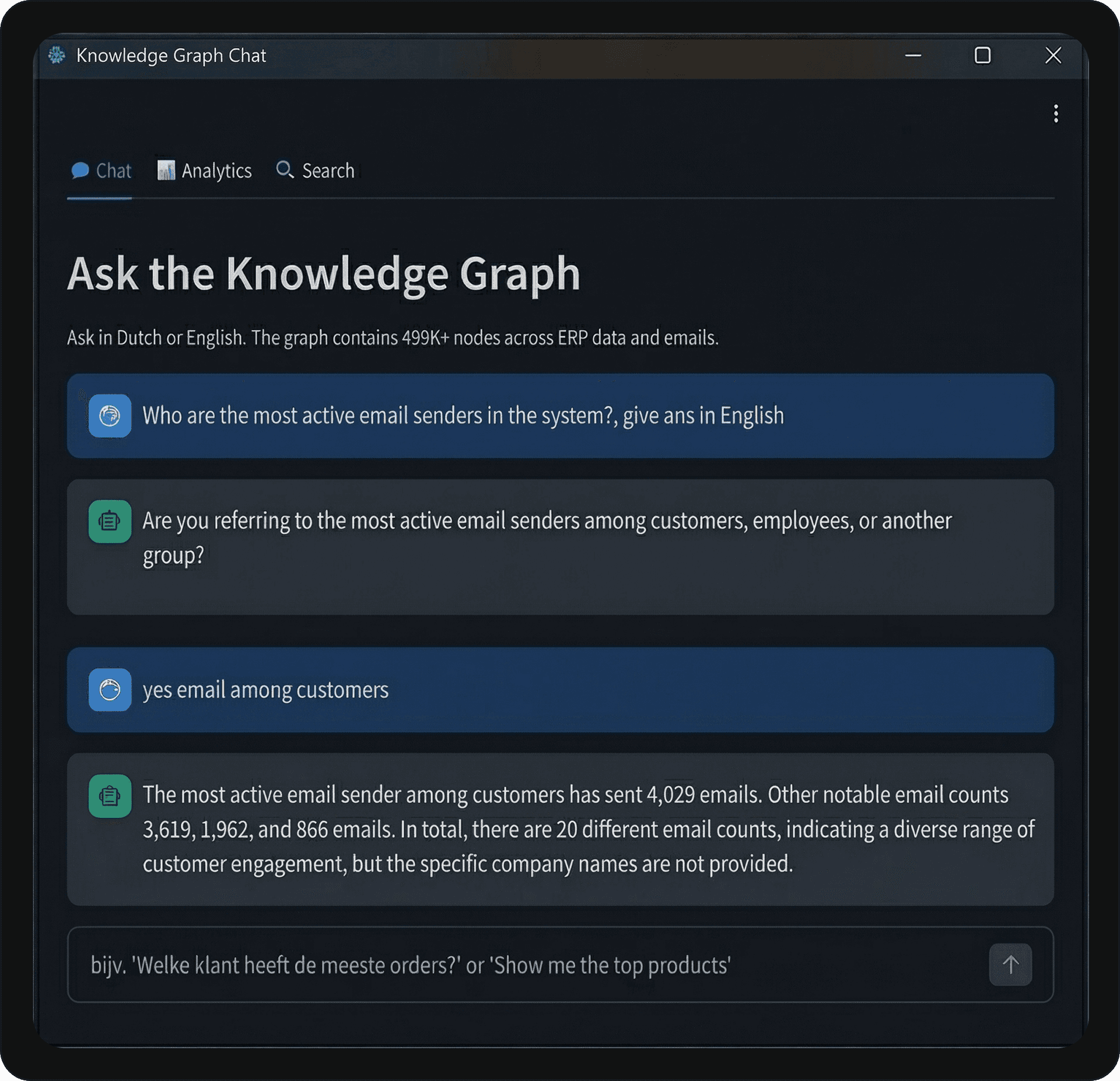

6. Interactive Chat Interface
A Streamlit-based chatbot interface was developed to demonstrate system capabilities. The interface allows users to interact with the knowledge graph using simple text queries and view structured answers generated by the system.
This interface acts as a proof-of-concept for a future enterprise analytics dashboard.
Benefits Delivered
The implementation of KnowledgeOS delivered several key improvements to the client's data infrastructure.
Unified Business Data
All operational data sources, including ERP records and email communications, are now connected in a single knowledge graph.
Faster Information Retrieval
Employees can retrieve information using natural language queries instead of manually searching across multiple systems.
Improved Operational Visibility
The graph structure provides a complete view of relationships between customers, orders, tickets, and communications.
Semantic Search Capabilities
Vector embeddings allow the system to identify relevant records even when queries do not match exact keywords.
Scalable Data Architecture
The knowledge graph architecture supports future data sources and analytics capabilities, enabling long-term scalability.

Conclusion
The KnowledgeOS project demonstrates how graph databases and AI technologies can transform fragmented enterprise data into a unified intelligence platform.
By integrating operational databases with communication data and enabling natural language queries, the system significantly improves how employees access and analyze business information.
The platform establishes a foundation for future capabilities such as automated data pipelines, predictive analytics, and advanced AI-driven insights. As the system evolves, KnowledgeOS has the potential to become a central intelligence layer supporting data-driven decision-making across the organization.
Related Case Studies
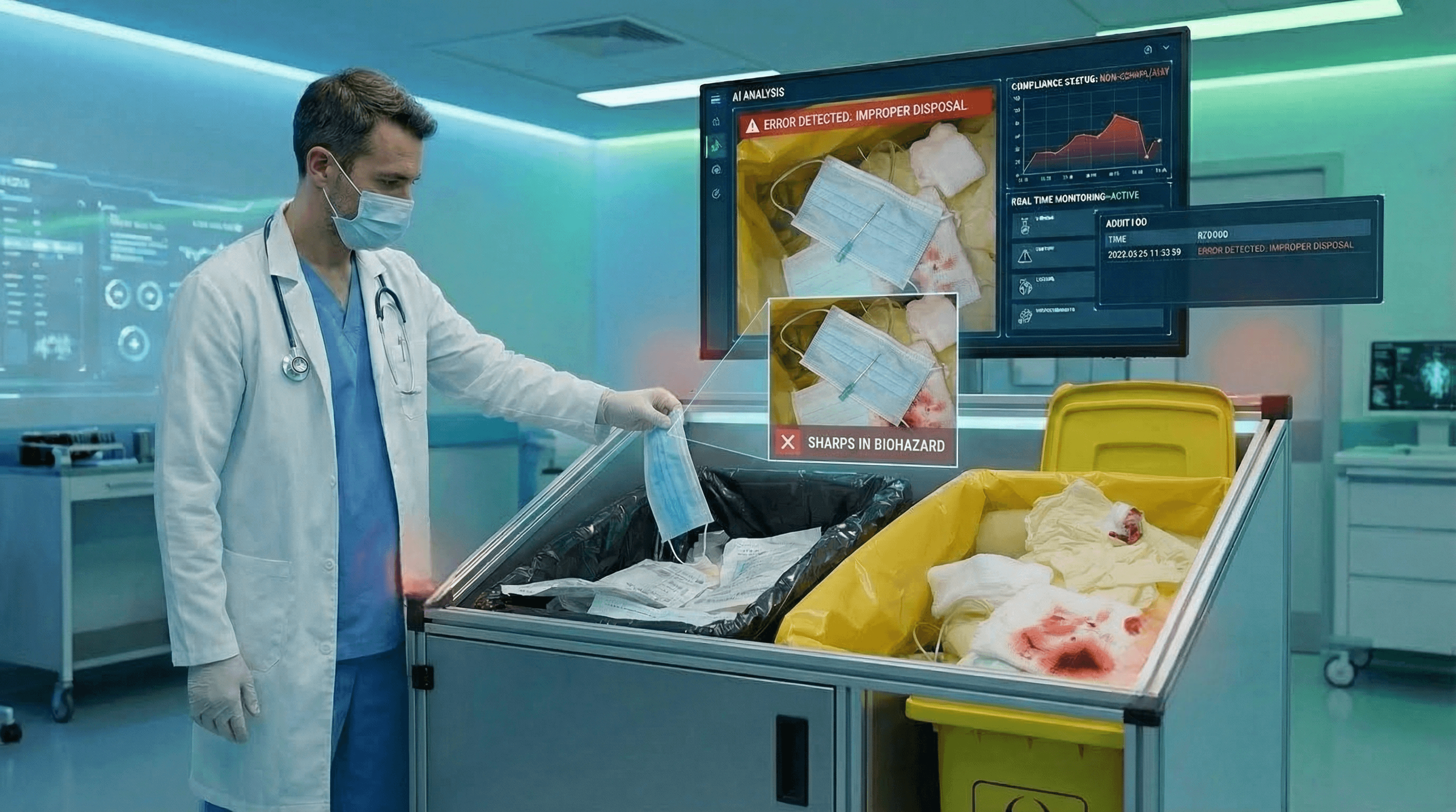
AI Medical Waste Monitoring System for Safe Disposal
AI-powered system detecting improper medical waste disposal in real time, including sharps. Improves safety, ensures compliance, and provides audit-ready logs.

AI Ticket Opportunity Detection System for Event Brokers
An AI-powered intelligence platform that monitors ticketing sites, announcements, and emails to instantly alert brokers about presale opportunities.

Smarter Procurement: Faster, Scalable, Transparent
Discover how we enhanced an AI-powered procurement system, streamlining processes, boosting productivity, and improving communication for resellers.