Every DevOps engineer hits the same wall eventually.
You finish the roadmap. Docker, Kubernetes, Terraform, Jenkins, Prometheus all checked off. You even have the certification. But six months into a real production role, the question that trips you up is not how a tool works. It is when and why to use it.
That gap is where most DevOps engineers quietly struggle. Here is how to actually think through it.
The Tool Trap
The DevOps ecosystem is vast, and tutorials make every tool look easy to learn. But knowing how to run a tool and knowing when to reach for it are two very different skills.
Certifications like the CKA or AWS DevOps Professional test whether you can operate a tool correctly, not whether you should use it. This produces engineers who can deploy Kubernetes without thinking but have never had to choose between K8s, Docker Swarm, and ECS for a three-service startup with a two-person ops team.
That is the tool trap. And most engineers fall into it.
Context Is Everything
Every tool was built for a specific problem in a specific context. Use it outside that context, and it creates more problems than it solves.
A startup with five engineers once set up a full Kubernetes cluster for three microservices. They spent 40% of their engineering time managing the cluster instead of shipping features. Six months later, they switched back to Docker Compose. Kubernetes is a great tool it just was not the right fit. It was designed for complex multi-node deployments with thousands of containers. Using it for a small startup is like using a freight train to deliver a single package.
The same logic applies everywhere. Terraform and Ansible both manage infrastructure, but they solve different problems. Terraform provisions it creates VMs, VPCs, subnets, databases. Ansible configures it installing NGINX, deploying applications, starting services. Using one where the other belongs is not a disaster, but it is friction you do not need.
Understanding when to use each and when to use both together is the kind of judgment that comes from experience or mentorship, not from completing a tutorial.
DevOps Is Not a Tool Collection
Martin Fowler puts it plainly: even with the best tools, DevOps is just a buzzword without the right culture. Atlassian's research backs this up people and process are the top factors in DevOps success, not tools.
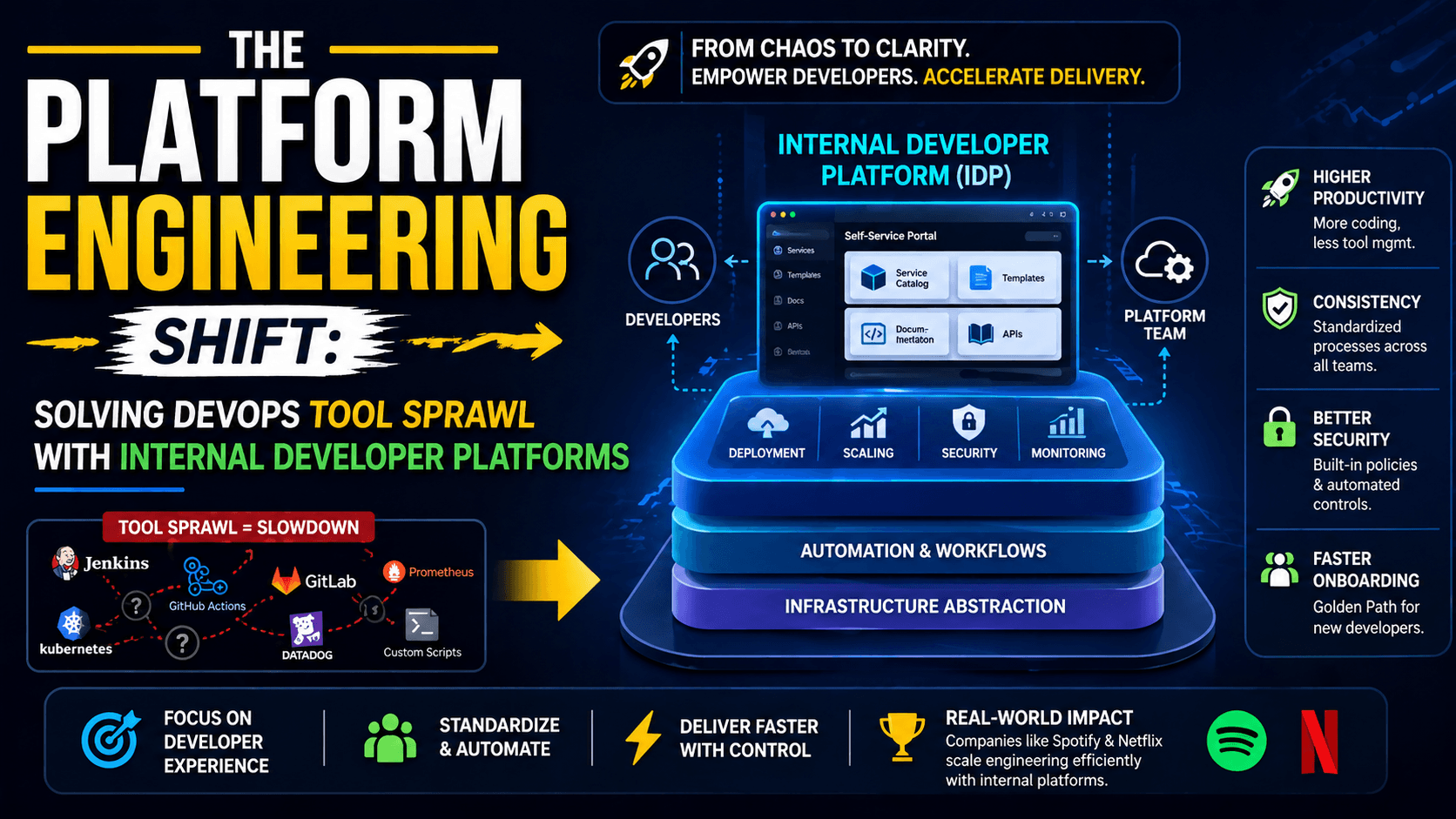
A related pitfall is tool sprawl teams ending up with Jenkins, GitHub Actions, and CircleCI all running in parallel, or three overlapping infrastructure-as-code tools with no standard. Each tool is fine on its own. Together, they create cognitive overload and onboarding nightmares. Gartner estimated that 75% of DevOps initiatives fail to meet expectations, and this is often exactly why.
How to Actually Pick the Right Tool
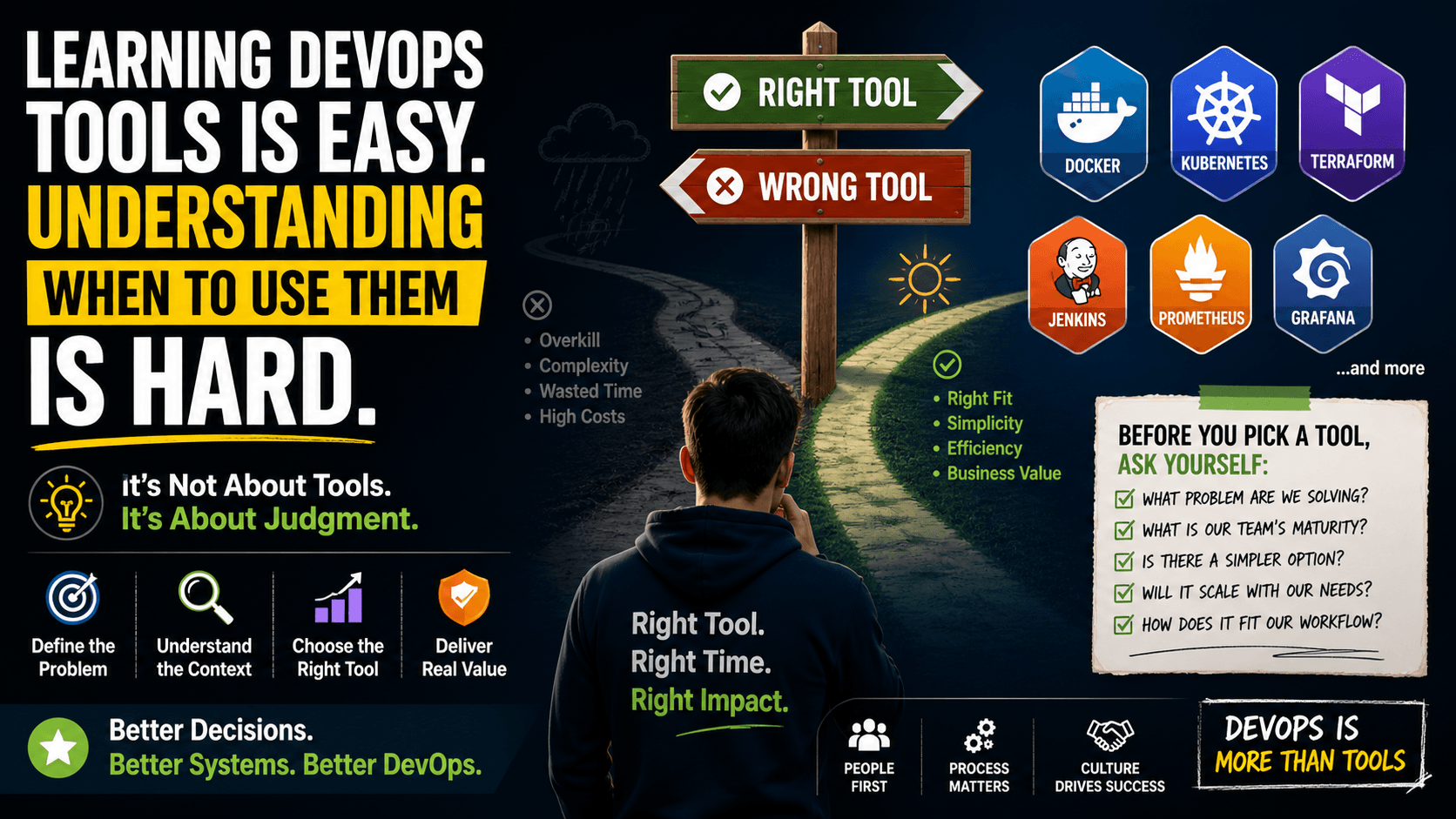
Start by defining the problem, not the solution. If you cannot state the problem in one sentence without naming a tool, you are not ready to pick one. Example: "Our deployments take three hours and require two engineers we need to automate on every merge to main." Now you can evaluate tools meaningfully.
Then ask the right context questions. Does your team have the skills to operate and maintain this tool? Will it integrate cleanly with your existing workflow? Is there a simpler tool that solves 80% of the problem with 20% of the complexity?
And follow a maturity ladder. Early-stage Docker Compose, GitHub Actions, a single VM, basic monitoring. Growth stage Terraform, explore managed Kubernetes. Scale stage full Kubernetes, GitOps, Prometheus and Grafana. Never skip stages to appear advanced. A startup running full Kubernetes is almost always slower and more fragile than one on Docker Compose. Simplicity is a feature.
The Honest Answer
New tools will keep emerging. The pace will not slow down. In that environment, the most valuable thing you can develop is judgment the ability to look at a situation and say: here is what we need, here is what we do not, and here is why.
Learning tools is easy. Knowing when and why to use them or not use them is what separates a good DevOps engineer from a great one. That is the kind of engineer every team is actually looking for.