Shadow AI is rapidly becoming one of the biggest security risks for organizations in 2026. As employees adopt AI tools without oversight, sensitive data and critical workflows are exposed in ways most companies cannot see or control.
Shadow AI Is Your Biggest Security Risk in 2026 And Most Companies Don’t See It Coming
The Hidden Risk Inside Modern AI Adoption
As organizations rapidly adopt AI tools to improve productivity and efficiency, a new and often overlooked challenge is emerging. The biggest risk is no longer just external cyber threats it is what’s happening quietly inside the organization.
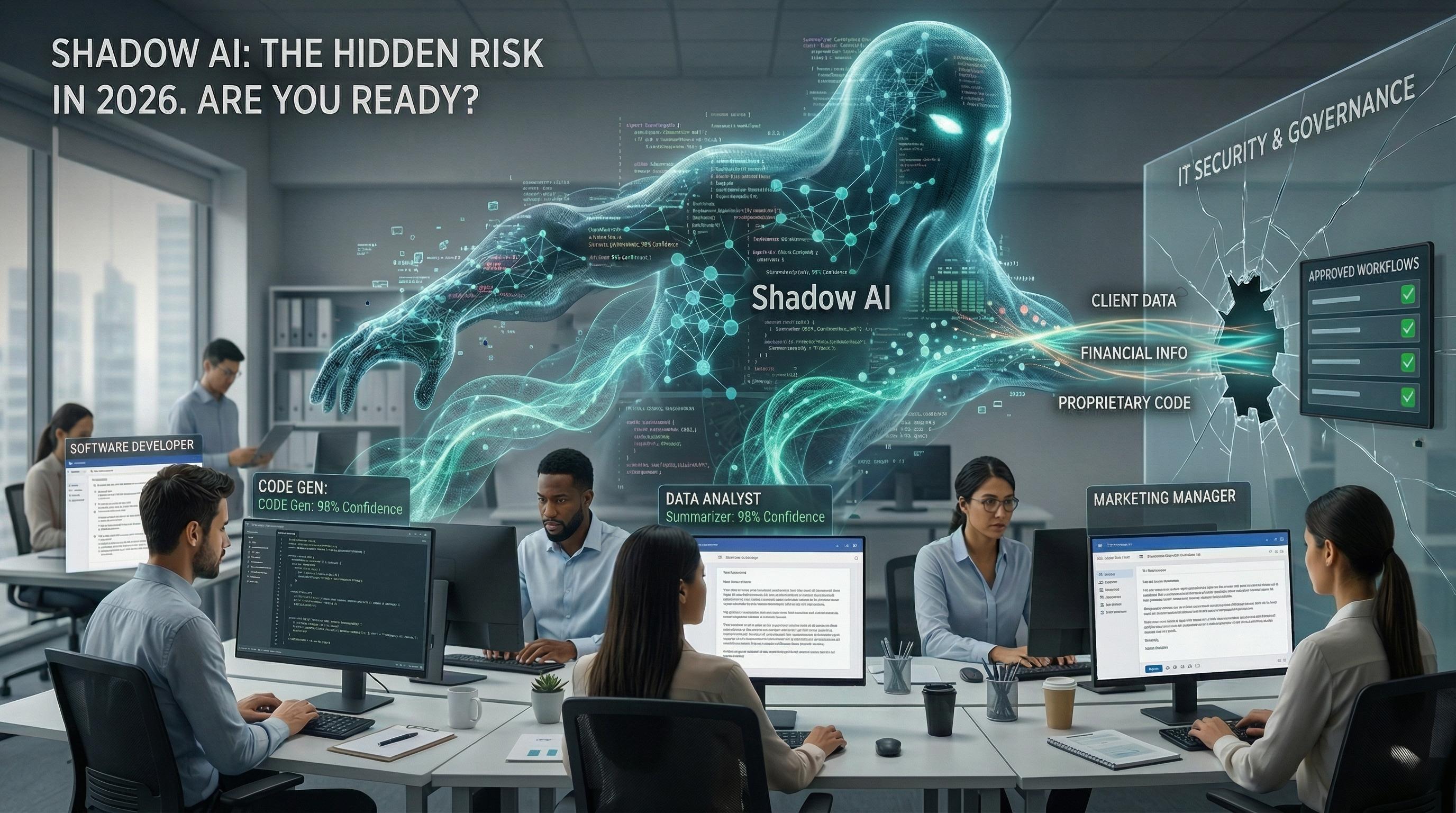
Employees across departments are increasingly using AI tools in their daily work. What starts as a simple task summarizing documents, generating code, or drafting emails quickly becomes part of critical workflows. However, most of this usage happens without approval, visibility, or governance.
This is what we now call Shadow AI.
Unlike traditional IT risks, Shadow AI operates silently. It doesn’t require infrastructure changes or formal deployment. It spreads organically, driven by employees trying to work faster and smarter. And that’s exactly what makes it dangerous.
Why Shadow AI Is Growing Faster Than Companies Can Control
One of the main reasons Shadow AI is becoming a major risk is the speed at which it is being adopted. AI tools are easily accessible, often free, and incredibly powerful. Employees don’t need technical expertise or approvals to start using them.
This creates a gap between AI adoption and AI governance.
While organizations are still defining policies and security frameworks, employees have already integrated AI into their workflows. Teams begin using different tools independently, leading to fragmented usage across the organization.
This decentralized adoption makes it nearly impossible for security teams to track: - Which tools are being used
- What data is being shared
- How AI is influencing business decisions
Over time, this lack of visibility turns into a significant security blind spot.
Data Exposure: The Most Immediate Threat
The most critical risk associated with Shadow AI is data exposure. Employees often input sensitive information into AI tools without fully understanding the implications.
This can include: - Customer and user data
- Financial information
- Internal documents
- Proprietary code
Once this data is entered into external AI systems, organizations lose control over how it is stored, processed, or potentially reused. This creates a scenario where sensitive information can unintentionally leak beyond organizational boundaries.
Lack of Visibility and Control
Security systems are designed to monitor known applications and approved workflows. Shadow AI bypasses these controls entirely.
Most AI tools are accessed through browsers or lightweight integrations, making them difficult to detect using traditional security approaches. As a result, organizations often have little to no insight into how AI is being used internally.
Without visibility, there is no control.
This means: - No audit trails
- No monitoring of data flow
- No enforcement of security policies
For security teams, this creates a situation where risks exist but cannot be measured or managed effectively.
Expanding the Attack Surface
Every AI tool introduced into an organization increases its attack surface. These tools often rely on APIs, external services, and integrations that extend beyond internal systems.
When employees independently adopt AI tools, they unknowingly introduce new entry points for potential threats. These integrations may not meet enterprise security standards, making them vulnerable to misuse or exploitation.
In addition, AI-generated outputs can sometimes introduce risks of their own, such as insecure code or inaccurate insights that influence decision-making.
The result is a rapidly expanding and largely unmanaged attack surface.
The Rise of Autonomous AI Agents
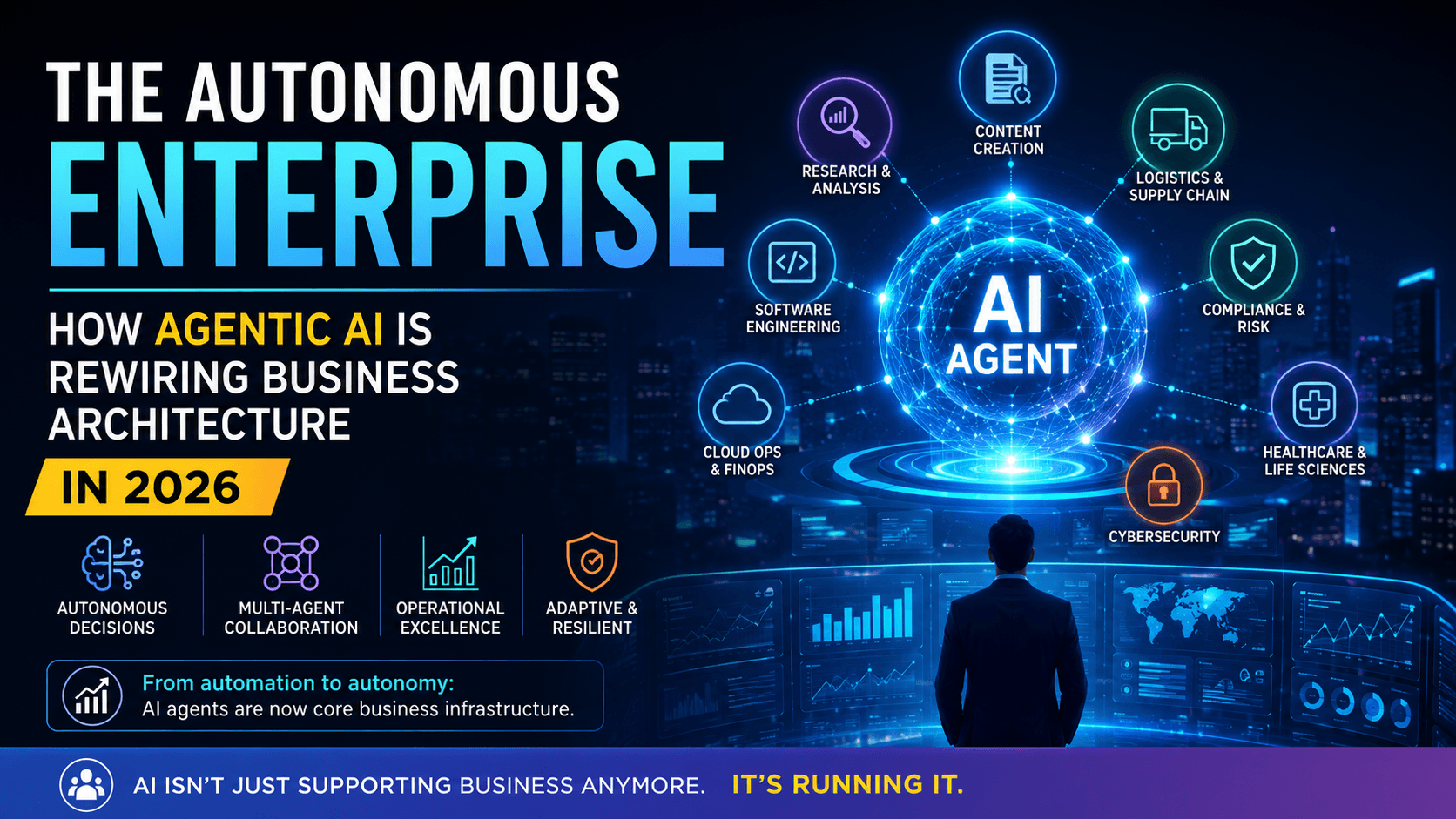
As AI continues to evolve, the introduction of autonomous agents adds another layer of complexity. These systems are capable of performing tasks, accessing tools, and making decisions with minimal human intervention.
While powerful, they also introduce new risks.
Organizations often: - Do not track AI-driven actions
- Cannot distinguish between human and AI activity
- Lack clear accountability for decisions made by AI systems
This creates challenges in governance, compliance, and security.
Why Most Companies Don’t See It Coming
Shadow AI is difficult to detect because it does not behave like a traditional security threat.
It is: - Unintentional
- Decentralized
- Invisible
- Rapidly scaling
Because of this, many organizations underestimate the risk. By the time it becomes visible, it is often already deeply embedded in workflows.
What Organizations Need to Do Now
Addressing Shadow AI does not mean restricting innovation. Attempting to block AI usage entirely is likely to fail.
Instead, organizations need to focus on managing and enabling safe AI usage.
Key steps include: - Gaining visibility into AI usage
- Defining governance and policies
- Providing secure, approved AI tools
- Monitoring AI interactions and data flow
Organizations must treat AI systems as active participants in their environment, not just tools.
Final Thoughts
For most organizations, the real challenge isn’t about whether to adopt AI or not it’s about how to adopt it responsibly without losing control. Shadow AI is not driven by malicious intent; it’s driven by the need for speed, efficiency, and better outcomes. One of the biggest mistakes companies make is reacting too late either ignoring AI usage entirely or trying to shut it down once risks become visible. Over time, both approaches create more problems than they solve. Lack of oversight leads to security gaps, while strict restrictions push employees toward unapproved tools, making Shadow AI even harder to detect.
Getting this balance right early is critical. Organizations need to enable AI adoption while ensuring visibility, governance, and data protection. This is not about slowing innovation it’s about structuring it in a way that is secure and sustainable.
At Stellarmind.ai, this is one of the first conversations we have with every client. We focus on understanding how AI is being used across the organization, identifying where Shadow AI risks may exist, and designing governance frameworks that align with real business workflows. In some cases, this means introducing secure AI solutions. In others, it involves building visibility and control into existing systems.
The goal is simple: enable teams to move fast with AI, without compromising on security or control.
If your organization is already using AI or planning to scale, it’s worth taking a step back to evaluate where Shadow AI might already exist. Addressing it early can prevent far more complex challenges in the future.