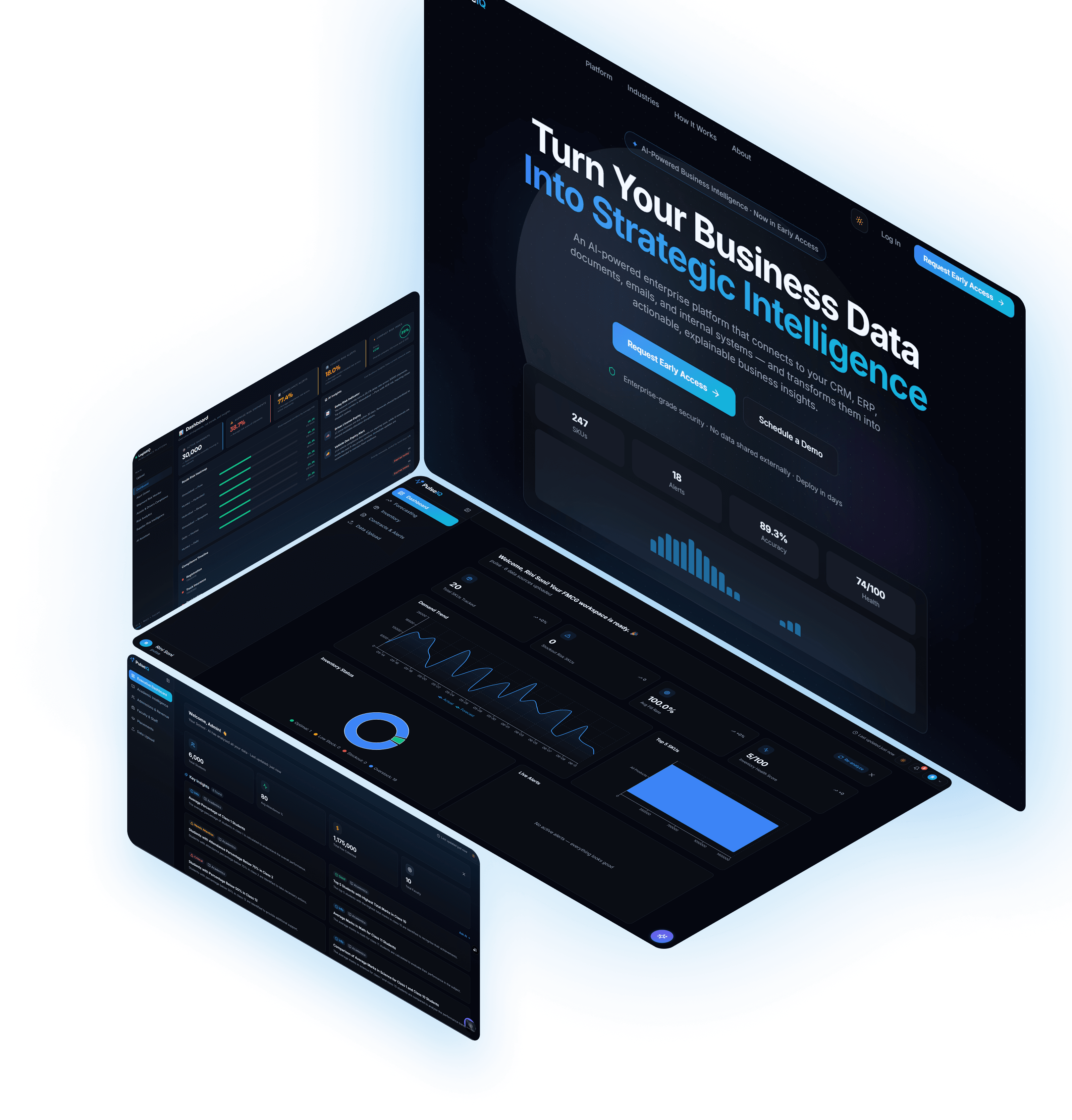
Deterministic AI Enterprise
Intelligence Platform
Enterprise intelligence platform combining AI and rule engines to analyze enterprise data and deliver reliable, explainable decision support.
Client Overview
Our client is a technology-driven enterprise organization focused on transforming how businesses analyze data and make operational decisions.
Traditional enterprise analytics platforms often rely on dashboards, manual analysis, and business intelligence tools that require human interpretation before action can be taken. While large language models (LLMs) provide powerful language capabilities, they often lack deterministic control, auditability, and reliability for enterprise decision-making.
The client wanted to build a next-generation enterprise intelligence platform that combines the reasoning power of LLMs with deterministic domain logic engines. The goal was to create a system capable of analyzing enterprise data, applying rule-based intelligence, and delivering clear, explainable insights to business users through natural language interfaces.
Technology Stack








Challenges
Many AI systems rely heavily on LLMs to interpret data and generate recommendations. However, LLMs can hallucinate information or make inconsistent decisions, making them unsuitable for critical enterprise use cases.

Lack of Explainability in AI Systems
Enterprise environments require systems that can clearly explain how decisions are made. Black-box AI models often fail compliance and audit requirements.

Need for Deterministic, Reproducible Outcomes
Enterprise platforms must guarantee that the same input always produces the same decision output for compliance and operational reliability.

Complex Industry-Specific Logic
Different industries require different rules, signals, and metrics. Hardcoding these rules into application code makes systems difficult to maintain and scale.

Combining Structured and Unstructured Data
Enterprise intelligence requires combining traditional structured data sources (databases, CRMs, ERPs) with unstructured content such as documents, reports, and internal notes.

Unreliable Decision-Making with Pure LLM Systems
Many AI systems rely heavily on LLMs to interpret data and generate recommendations. However, LLMs can hallucinate information or make inconsistent decisions, making them unsuitable for critical enterprise use cases.
Solutions
We developed an AI Enterprise Intelligence Platform that integrates a deterministic domain logic engine (AIX) with LLM capabilities to create explainable, auditable decision intelligence.
The system separates language understanding from decision logic, ensuring reliability and transparency in enterprise AI applications
1. AIX Domain Logic Engine
At the core of the platform is the AIX engine, a configuration-driven domain intelligence system responsible for executing business logic.
The AIX engine manages:
2. Config-Driven Domain Architecture
Each industry or business unit defines its domain logic through configuration files that describe:
This approach enables rapid customization while ensuring consistency and maintainability across deployments.
3. Signal Engine for Derived Business Metrics
The platform includes a signal computation layer that transforms raw data into meaningful metrics used for analysis.
Signals are deterministic calculations derived from enterprise data such as:
These signals act as the foundation for the platform's decision logic.
4. Rule Engine for Business Intelligence
A rule-based engine evaluates signals against configurable conditions to produce structured decision outputs.
Rules convert data signals into actionable insights such as:
All rules are human-readable, auditable, and configurable without requiring code changes.
5. Scoring Engine for Prioritized Intelligence
The scoring engine generates normalized scores that allow enterprises to prioritize risks, opportunities, or performance metrics.
Scores enable:
6. Guardrails and Compliance Controls
Enterprise guardrails ensure the system operates within strict compliance boundaries.
Guardrails define:
These rules prevent AI systems from performing actions that violate business policies or industry regulations.
7. Controlled LLM Integration
LLMs are integrated only where natural language capabilities are required.
The system uses LLMs for:
This architecture ensures the LLM never controls business decisions, preserving reliability and transparency.
Benefits Delivered
Reliable AI Decision Intelligence
The platform ensures that business decisions are driven by deterministic rules rather than probabilistic AI outputs.
Explainable AI
Every insight and recommendation is traceable back to signals, rules, and scores, ensuring transparency.
Scalable Across Industries
The configuration-driven architecture allows the system to support multiple industries with minimal engineering effort
Faster Enterprise Insights
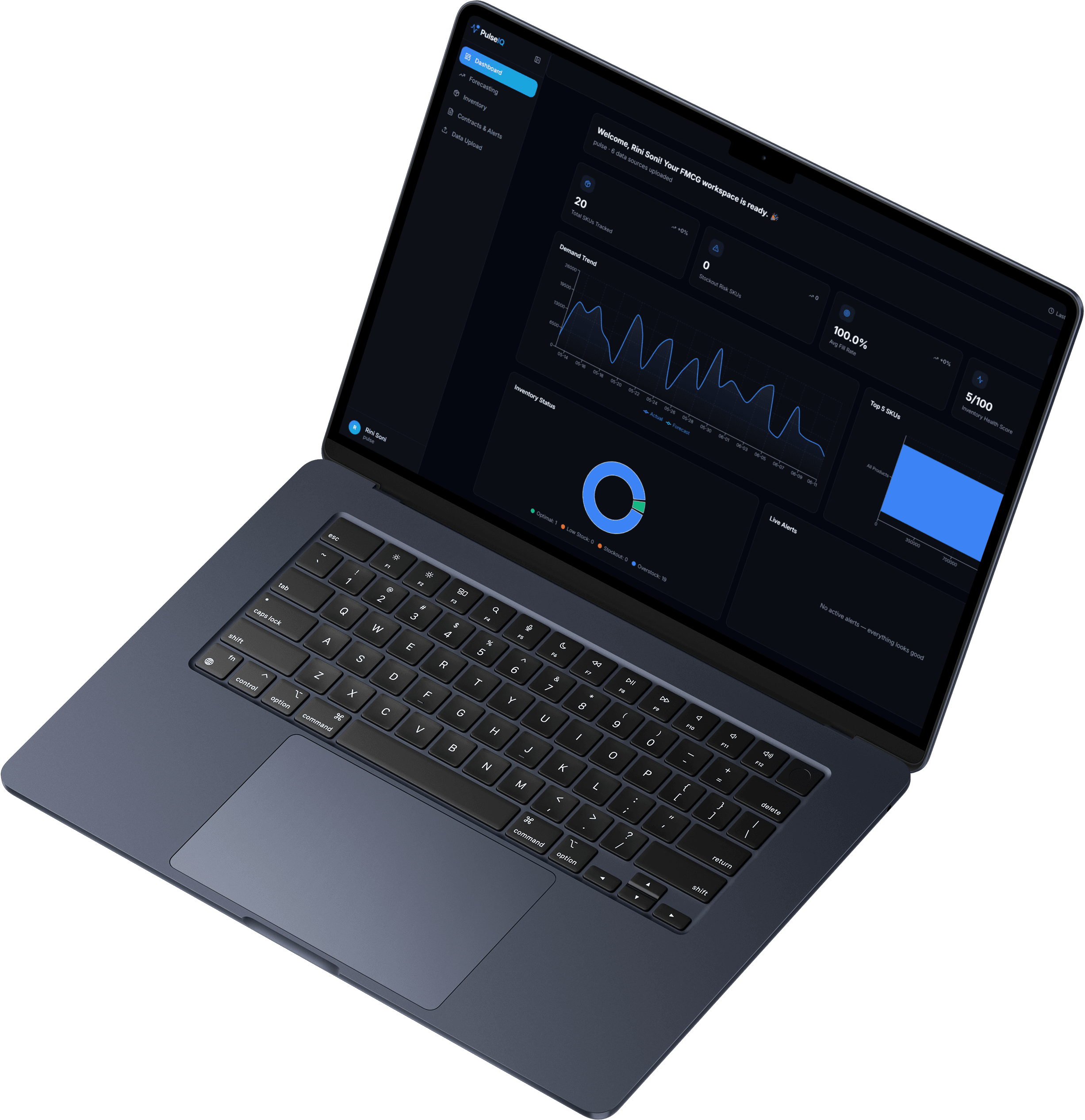
Business users can ask questions in natural language and instantly receive structured, data-backed insights.
Enterprise-Grade Security and Governance
Built-in access control, audit logging, and guardrails ensure the platform meets enterprise governance requirements.
Conclusion
This project demonstrates how enterprises can safely combine the strengths of large language models with deterministic logic systems to build reliable AI intelligence platforms.
By separating language understanding from decision logic, the platform delivers explainable, auditable, and scalable AI capabilities suitable for real-world enterprise operations.
The system provides a strong foundation for future expansion, including advanced analytics, industry-specific intelligence modules, and AI-powered enterprise copilots.
Related Case Studies
View All →
Secure CaseTracking & Client Management System
Secure case management platform that enables clients and case managers to track case progress, manage documents, communicate, and schedule appointments.
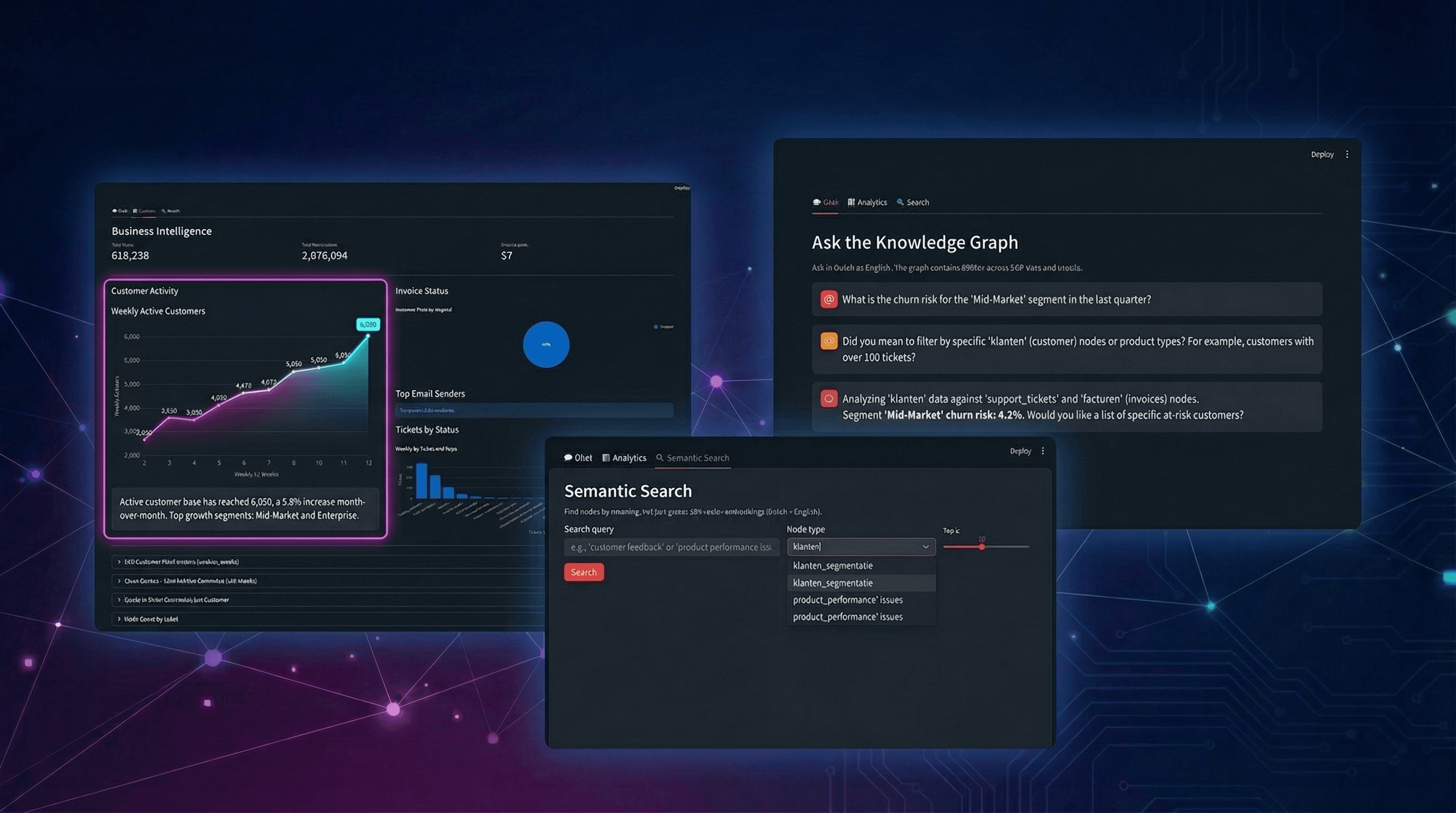
AI Knowledge Graph Platform for Enterprise Data Intelligence
AI-powered knowledge graph platform that connects ERP systems, emails, and operational data into a unified system enabling semantic search and natural language queries.
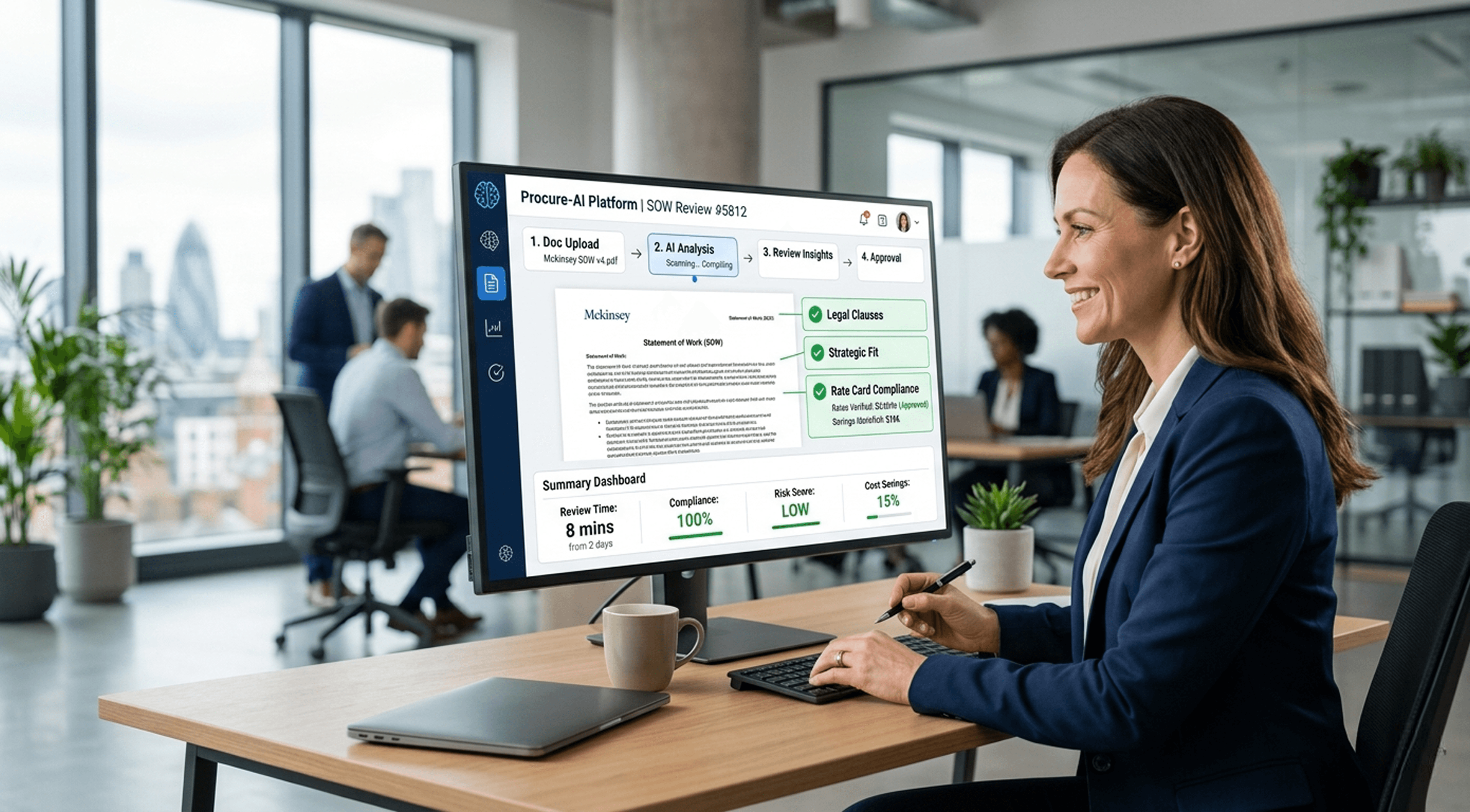
AI-Powered Consulting Procurement Automation Platform
AI-powered platform that automates supplier proposal review, pricing checks, and compliance—helping procurement teams save time, reduce risks, and decide faster.