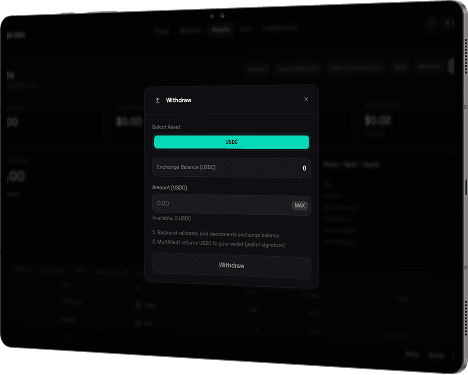
Ignite DEX trading platform
Hybrid DEXNon-CustodialHigh-PerformanceMulti-Chain

Ignite DEX

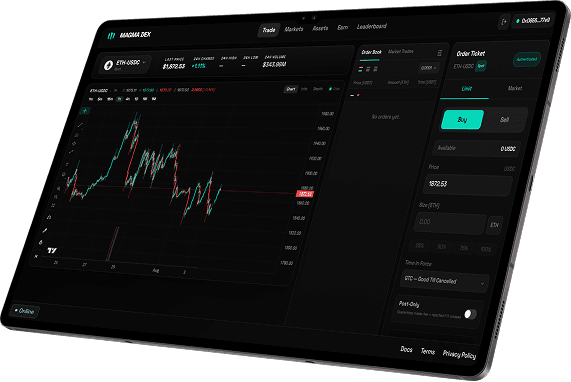
A hybrid non-custodial decentralized exchange with fast off-chain matching, on-chain settlement, spot and perpetual trading, and permissionless listings.

Client Overview

Ignite DEX is a hybrid, non-custodial decentralized exchange enabling CEX-grade performance with blockchain-native security. Built across Lithosphere, Base, Arbitrum, and BNB Chain, the platform combines off-chain order matching with on-chain settlement.

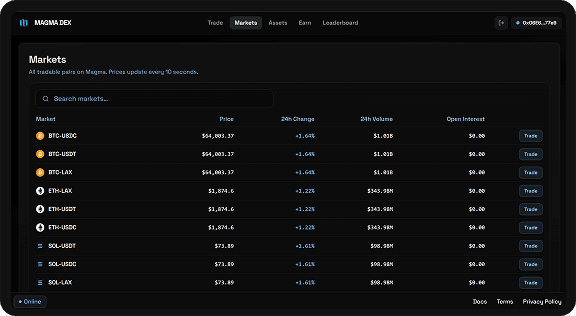
The platform unifies spot and perpetual futures trading, permissionless token listings, cross-chain liquidity routing, and a native IGNT token powering fees, governance, and staking.

Rather than relying only on smart contracts, Ignite delivers deterministic in-memory matching in sub-millisecond latency, then batches confirmed trades to the blockchain every 1-5 seconds for finality.

Technology Stack

React JS
Next JS
Node JS
TypeScript
Nginx
Docker
Redis
PostgreSQL
Binance API
Fastify
Prisma ORM
SOSolidity
OPOpenZeppelin
HAHardhat
VIViem
WAWagmi

Challenges

1. Multi-Chain Deterministic Execution

Coordinating order matching across separate EVM chains while preserving price-time priority, preventing double-spends, and maintaining a single source of truth for user balances without creating a centralized oracle vulnerability.

2. Real-Time Price Feed Aggregation

Sourcing live pricing for proprietary AI/ML tokens and multiple market feeds while avoiding stale fallback data and keeping the trading interface responsive.

3. Hybrid Settlement Consistency

Synchronizing off-chain matching results with on-chain vault contract state through blockchain event listeners, without creating balance discrepancies.

4. High Performance Without Scaling

Operating a full trading engine with order matching, portfolio calculations, liquidation checks, funding-rate computations, and thousands of concurrent WebSocket connections.

5. Scalable Wallet Integration

Supporting WalletConnect v2 across web, mobile, and desktop applications with EIP-712 signature-based authentication and secure contract calls.

6. Monorepo Deployment Complexity

Managing a tightly coupled multi-package monorepo with shared types, environment variables, contract addresses, local development, staging, and production builds.

Solutions

1. Hybrid Architecture for Performance Without Compromise

A deterministic in-memory matching engine delivers sub-millisecond order execution, while trades are asynchronously batched and settled on-chain for security and auditability.

Hybrid Architecture for Performance Without Compromise

2. Multi-Source Price Feed Architecture

A tiered pricing architecture combines Binance, CoinGecko, and fallback sources to maintain reliable market prices, volume data, and live trading updates across supported assets.

Multi-Source Price Feed Architecture

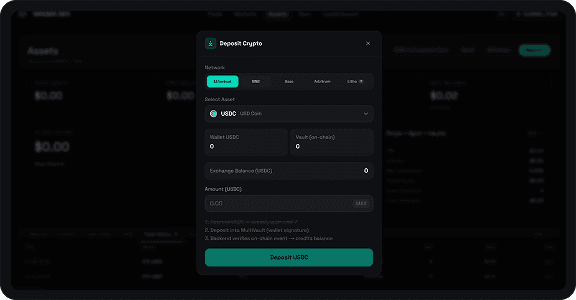
3. Non-Custodial Custody Model via Smart Contracts

Smart-contract vaults keep user funds on-chain while the platform synchronizes verified balances with its internal trading ledger, allowing fast portfolio management without taking custody of user assets.

Non-Custodial Custody Model via Smart Contracts

4. Event-Driven Settlement Synchronization

Blockchain deposit, withdrawal, and settlement events are automatically detected, verified, and synchronized with PostgreSQL to keep on-chain activity and internal account balances consistent.

Event-Driven Settlement Synchronization

5. Passwordless Wallet Authentication

EIP-712 wallet signatures replace traditional passwords, enabling secure session-based authentication while tying every trading action directly to the user's blockchain wallet.

Passwordless Wallet Authentication

6. Real-Time WebSocket Trading Updates

Persistent WebSocket connections stream order fills, positions, and market updates instantly, eliminating inefficient polling.

7. Deterministic Order Processing Under Load

In-process matching, background workers, database connection pooling, and Redis caching minimize latency under high trading volume.

8. Centralized Multi-Chain Configuration

A shared configuration layer manages chain IDs, RPC endpoints, contract addresses, and token metadata across the monorepo.

9. Production Observability & Monitoring

Prometheus, Grafana, and Loki provide real-time visibility into latency, order failures, WebSocket activity, settlement delays, and application logs.

Benefits Delivered

The AI-powered trading platform delivered significant business and technical advantages.

1. Sub-Millisecond Order Execution

An in-process TypeScript matching engine achieves deterministic price-time priority in memory while trades are settled on-chain.

2. Non-Custodial Security Model

Collateral remains in smart-contract vaults, allowing users to retain control of funds while benefiting from a fast trading experience.

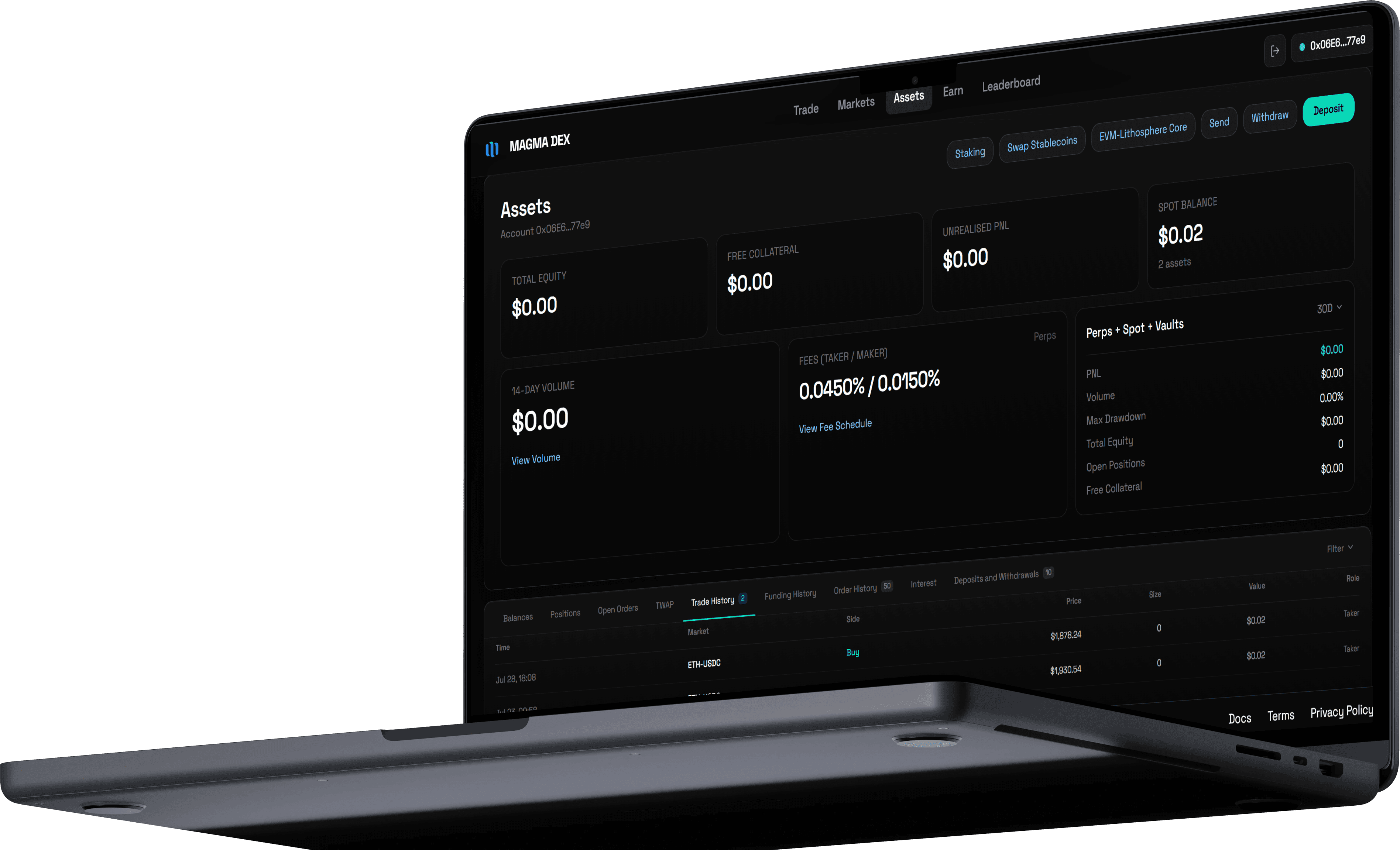
3. Real-Time Multi-Chain Portfolio Dashboard

A unified balance service aggregates deposits across four chains into a single portfolio view with live prices and token balances.

4. Permissionless Market Listings

Wallets can deploy trading pairs without approval. New pairs are indexed immediately and become tradable across supported chains.

5. Institutional-Grade Observability

Prometheus and Grafana dashboards monitor latency percentiles, order rejection rates, WebSocket queues, and settlement batches.

6. Mobile + Desktop Parity with Web

A shared TypeScript codebase delivers full trading functionality across iOS, Android, Windows, macOS, and the web.

7. Zero Downtime Deployments

Automated migration and container startup workflows keep schema changes and production deployments repeatable and reliable.

Conclusion

  • Ignite DEX demonstrates that high-performance DEX infrastructure can be built without sacrificing non-custodial security or user control. By layering a deterministic in-process matching engine on top of permissionless smart contracts, the platform achieves sub-millisecond order execution while keeping user collateral in on-chain vaults.
  • The monorepo architecture enables rapid feature iteration and consistent type safety across the stack. Real-time pricing from Binance and CoinGecko, EIP-712 authentication, and multi-chain settlement create a strong foundation for institutional trading without centralized infrastructure.
  • Turborepo parallel builds, GitHub Actions CI/CD automation, and Docker-based deployments create a repeatable path from local development to production across web, mobile, and desktop applications.