7 Features Every Modern Maritime Inspection Platform Should Have
Maritime safety inspections are becoming increasingly complex. Inspection companies are expected to manage larger fleets, comply with international regulations, deliver faster reports, and maintain complete traceability—all while ensuring operational efficiency.
Yet many organizations still rely on paper checklists, spreadsheets, disconnected software, and manual reporting processes. These outdated workflows not only slow inspections but also increase the risk of documentation errors, delayed certifications, and compliance issues.
A modern maritime inspection platform goes beyond digitizing paper forms. It connects inspectors, operations teams, customers, and enterprise systems into a unified digital workflow.
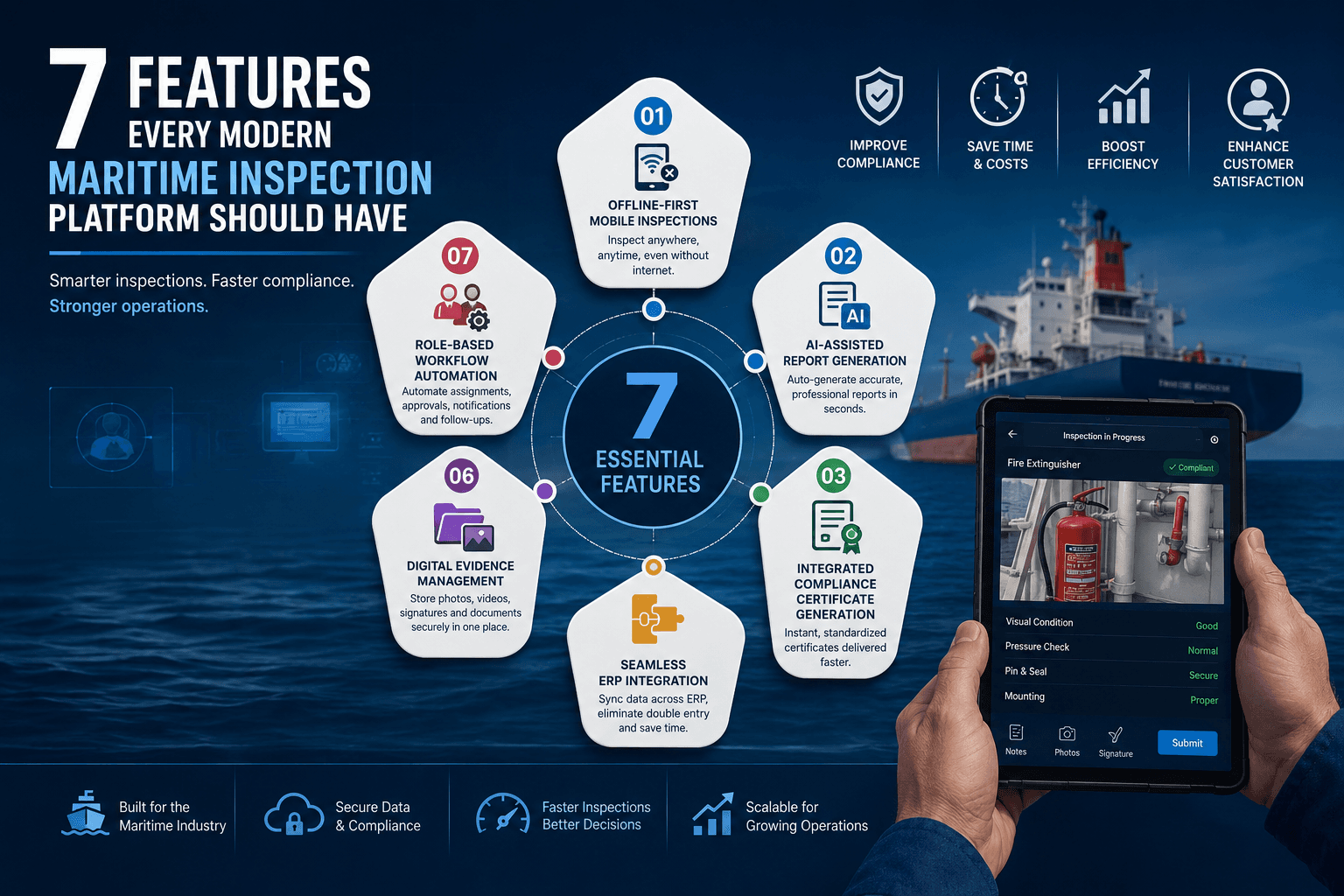
Below are seven essential features every modern maritime inspection platform should include.
1. Offline-First Mobile Inspections
Maritime inspections are often performed onboard vessels where internet connectivity is unreliable or unavailable. Inspectors cannot afford to stop working simply because they lose network access.
An offline-first platform allows inspectors to:
- Complete inspections without internet access
- Capture photos and inspection evidence offline
- Record equipment readings and observations
- Automatically synchronize data once connectivity is restored
This ensures inspections continue uninterrupted regardless of location.
2. AI-Assisted Report Generation
Creating inspection reports manually consumes valuable time after every inspection.
A modern platform should automatically generate professional inspection reports using collected inspection data, photographs, inspector comments, and predefined templates.
AI-powered report generation helps organizations:
- Reduce report preparation time
- Maintain consistent documentation
- Eliminate repetitive formatting
- Improve report accuracy
- Deliver reports significantly faster
Instead of spending hours preparing documentation, inspectors can focus on conducting inspections.
3. Integrated Compliance Certificate Generation
For many customers, receiving their compliance certificate quickly is just as important as the inspection itself.
Rather than manually creating certificates, a modern inspection platform should automatically generate approved certificates once inspections are reviewed and completed.
Benefits include:
- Faster certificate delivery
- Standardized documentation
- Reduced administrative workload
- Improved customer satisfaction
- Better compliance tracking
Automation minimizes delays while maintaining documentation quality.
4. Seamless ERP Integration
Inspection data should never need to be entered multiple times.
Modern inspection platforms integrate directly with ERP systems to synchronize operational data across departments.
ERP integration enables organizations to automatically update:
- Customer records
- Inspection history
- Asset information
- Inventory status
- Work orders
- Billing information
- Compliance records
This eliminates duplicate data entry while ensuring everyone works from the same information.
5. Real-Time Operational Dashboard
As organizations grow, managing inspections through spreadsheets quickly becomes inefficient.
A centralized dashboard provides complete visibility into ongoing operations by displaying:
- Active inspections
- Completed inspections
- Pending approvals
- Certificate status
- Inspector workload
- Upcoming inspection schedules
- Fleet-wide inspection progress
With real-time insights, managers can make faster and more informed operational decisions.
6. Digital Evidence Management
Inspection reports often require photographs, equipment documentation, and supporting evidence.
A modern platform should securely organize all inspection assets in one place, including:
- Equipment photos
- Inspection videos
- Digital signatures
- Customer approvals
- Supporting documents
- Historical inspection records
Having all evidence linked directly to each inspection simplifies audits and improves traceability.
7. Role-Based Workflow Automation
Maritime inspections involve multiple stakeholders, including inspectors, quality reviewers, operations managers, administrators, and customers.
A modern platform should automate workflows based on user roles.
Examples include:
- Automatic inspection assignment
- Review and approval workflows
- Notification alerts
- Certificate issuance
- Customer status updates
- Task reminders
- Escalation for overdue inspections
Workflow automation reduces manual coordination while improving operational efficiency.
Why These Features Matter
Modern inspection platforms are not simply digital replacements for paper forms—they are comprehensive operational systems that streamline inspection processes from start to finish.
Organizations that adopt these capabilities benefit from:
- Faster inspection completion
- Reduced administrative workload
- Improved reporting accuracy
- Better regulatory compliance
- Faster certificate delivery
- Increased operational visibility
- Scalable inspection operations
- Enhanced customer experience
As inspection volumes continue to grow, digital platforms become essential for maintaining efficiency and meeting customer expectations.
Looking Ahead
The future of maritime inspections lies in intelligent, connected platforms that combine AI, automation, offline capabilities, and enterprise integration.
By replacing fragmented manual workflows with a unified digital ecosystem, inspection companies can improve productivity, reduce operational costs, and deliver faster, more reliable services without compromising compliance.
Investing in the right inspection platform today lays the foundation for safer operations, stronger customer relationships, and sustainable long-term growth in an increasingly competitive maritime industry.