The maritime industry operates under some of the world's strictest safety regulations. Fire safety inspections play a critical role in ensuring vessels remain compliant, operational, and ready for sea. Yet despite advancements in technology, many inspection companies still rely on paper forms, spreadsheets, disconnected systems, and manual documentation.
While these traditional processes may appear manageable, they introduce hidden operational costs that grow significantly as inspection volumes increase.
As inspection companies scale, the true cost isn't just the time spent performing inspections—it's the administrative burden that follows.
The Reality of Traditional Inspection Workflows
A typical maritime fire safety inspection involves far more than checking fire extinguishers and safety equipment.
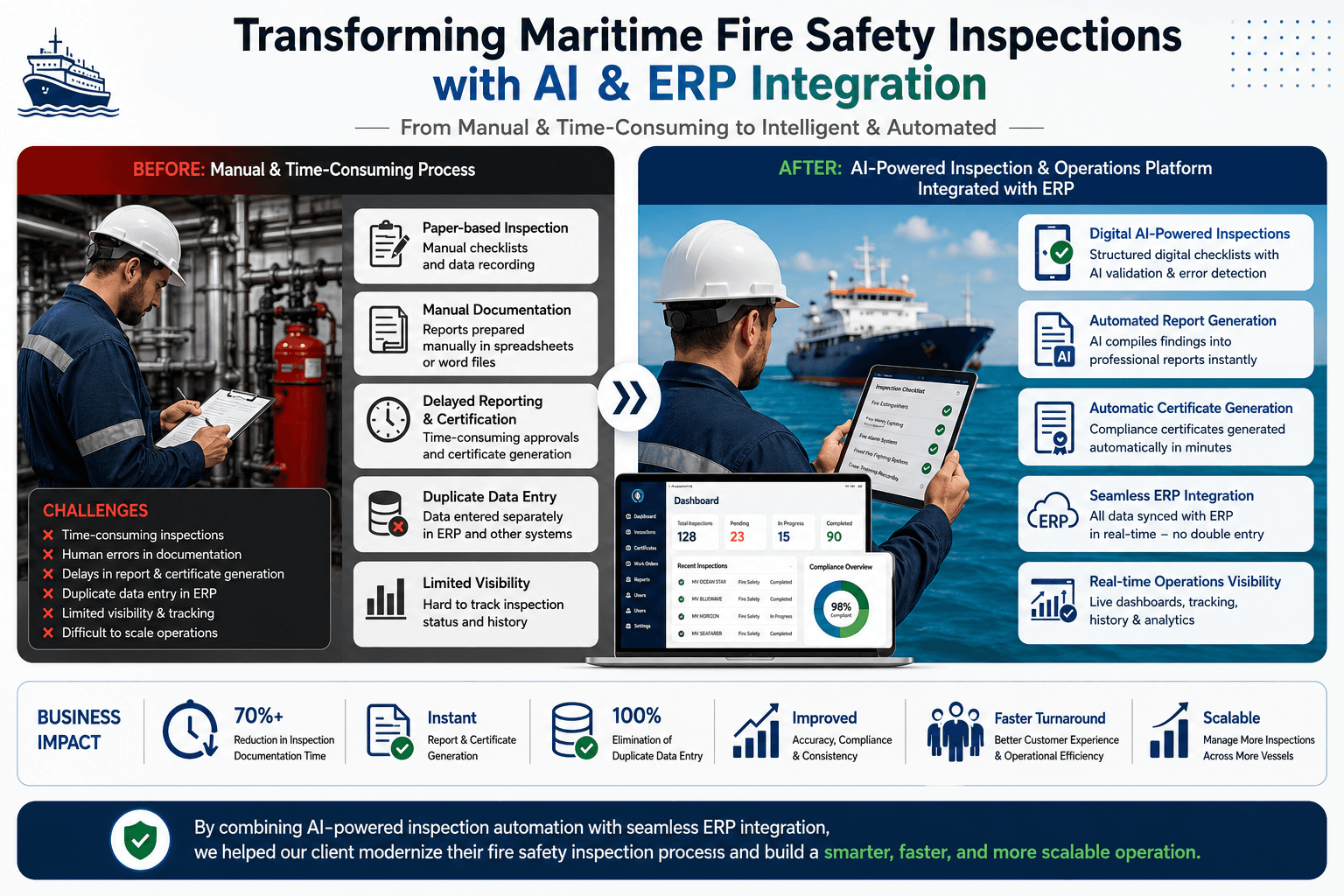
After inspectors complete their onboard assessments, operations teams often spend hours transferring notes into reports, generating compliance certificates, updating ERP systems, coordinating with customers, and maintaining inspection records.
Each manual step increases workload while creating opportunities for delays and errors.
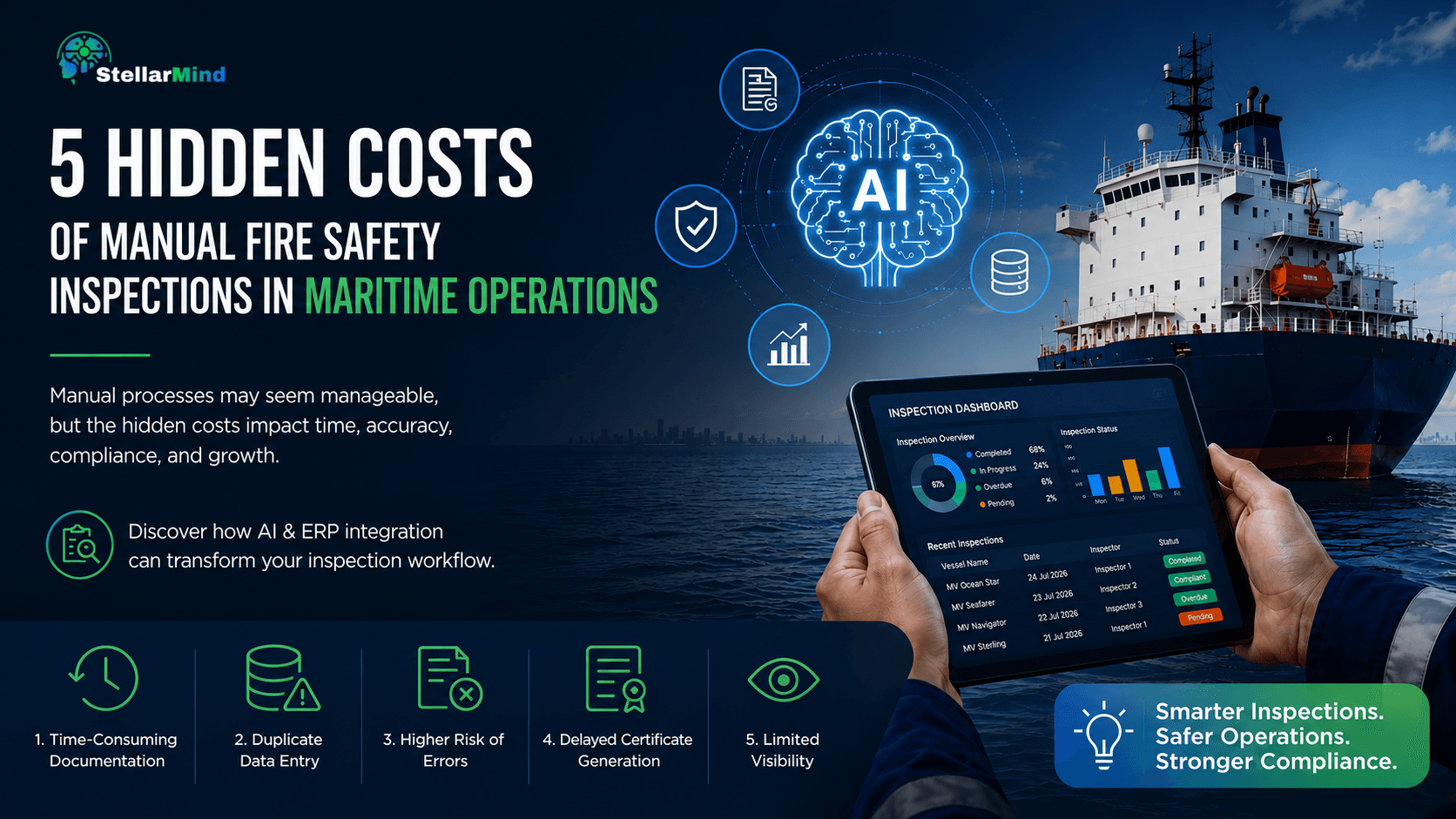
1. Documentation Consumes More Time Than Inspections
For many organizations, documentation takes nearly as much time as the inspection itself.
Engineers manually prepare reports, organize photographs, verify inspection findings, and format documents according to company standards. As inspection volumes grow, this administrative effort becomes increasingly difficult to manage.
Automating report generation allows inspection teams to focus on field operations rather than paperwork.
2. Duplicate Data Entry Slows Operations
One of the biggest inefficiencies comes from entering the same information into multiple systems.
Inspection details are first recorded during field inspections and then entered again into ERP systems, customer databases, certificate templates, and reporting software.
Besides consuming valuable time, duplicate entry significantly increases the likelihood of inconsistent records.
Seamless integration between inspection platforms and ERP systems eliminates repetitive work while ensuring every department works with the same data.
3. Manual Reporting Increases Human Error
Even experienced inspectors can make documentation mistakes when preparing reports manually.
Missing inspection values, inconsistent terminology, incorrect equipment details, or outdated templates can create compliance risks and require additional review before reports are approved.
Standardized digital workflows combined with AI-assisted validation help improve reporting consistency while reducing manual verification.
4. Delayed Certificate Generation Impacts Customer Experience
Compliance certificates are often the final deliverable customers are waiting for.
When certificate creation depends on manual document preparation, approvals, and formatting, customers may experience unnecessary delays despite inspections already being completed.
Automated certificate generation enables organizations to deliver approved documentation within minutes instead of days, improving both operational efficiency and customer satisfaction.
5. Limited Visibility Makes Scaling Difficult
As inspection operations expand across multiple vessels, customers, inspectors, and locations, tracking progress through spreadsheets becomes increasingly challenging.
Management often struggles to answer important operational questions:
- Which inspections are currently in progress?
- Which certificates are awaiting approval?
- Which inspectors have pending assignments?
- Which vessels require upcoming inspections?
Without centralized visibility, decision-making becomes reactive rather than proactive.
Digital inspection platforms provide real-time dashboards that give operations teams complete visibility across the entire inspection lifecycle.
The Smarter Approach
Modern maritime inspection platforms go beyond replacing paper forms.
By combining AI-powered inspection workflows with ERP integration, organizations can digitize every stage of the inspection lifecycle—from field inspections and report generation to compliance certificates and operational management.
Instead of disconnected systems, inspection teams work within one connected platform where information flows automatically between inspectors, operations teams, and enterprise systems.
The result is faster inspections, more accurate documentation, improved compliance, and a scalable operational model that supports long-term business growth.