AIAutomation
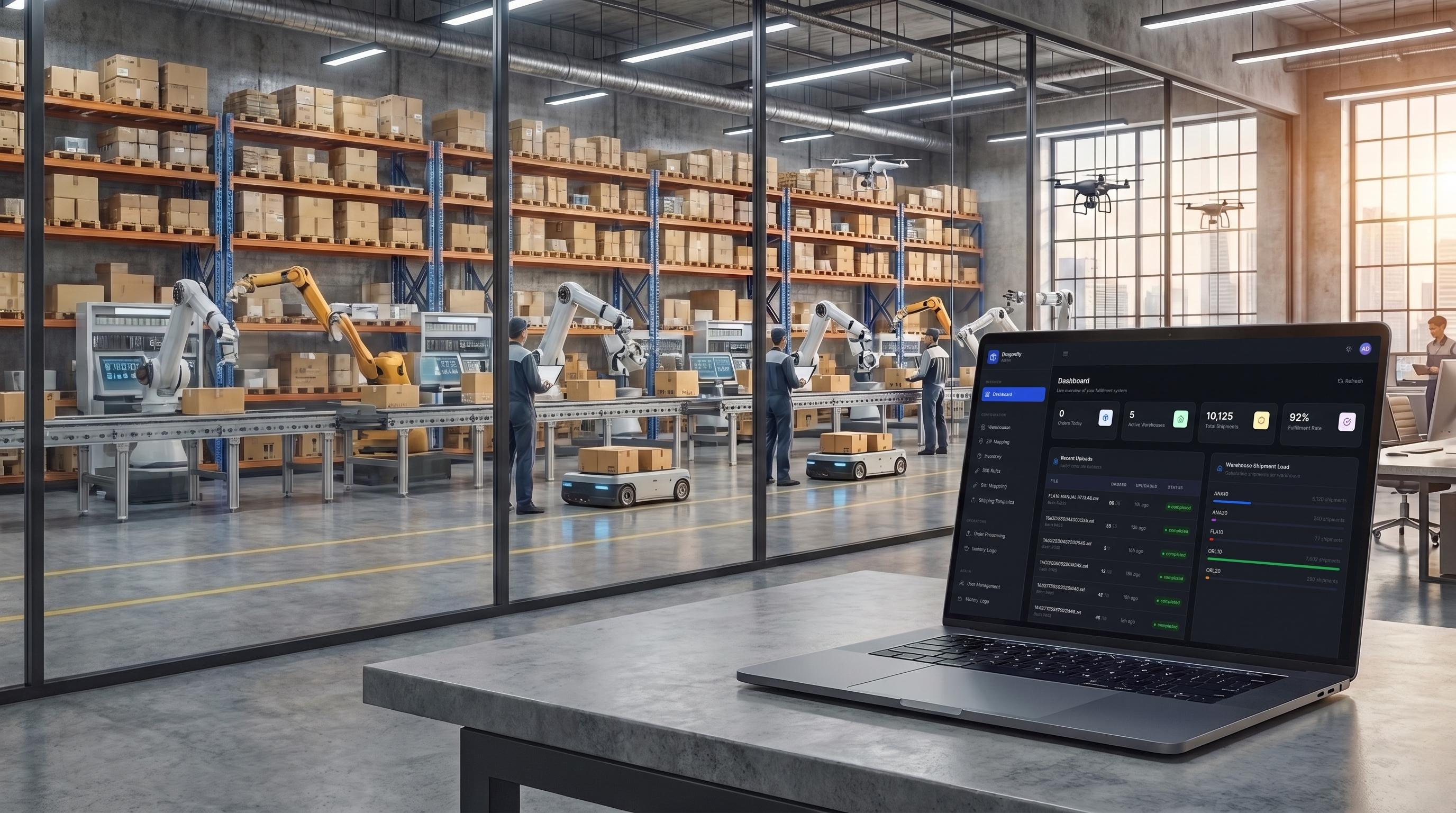
Multi-Warehouse Fulfillment | Automated Order Routing
A multi-warehouse fulfillment platform that automates order routing, optimizes inventory allocation, and streamlines Amazon and Walmart fulfillment.
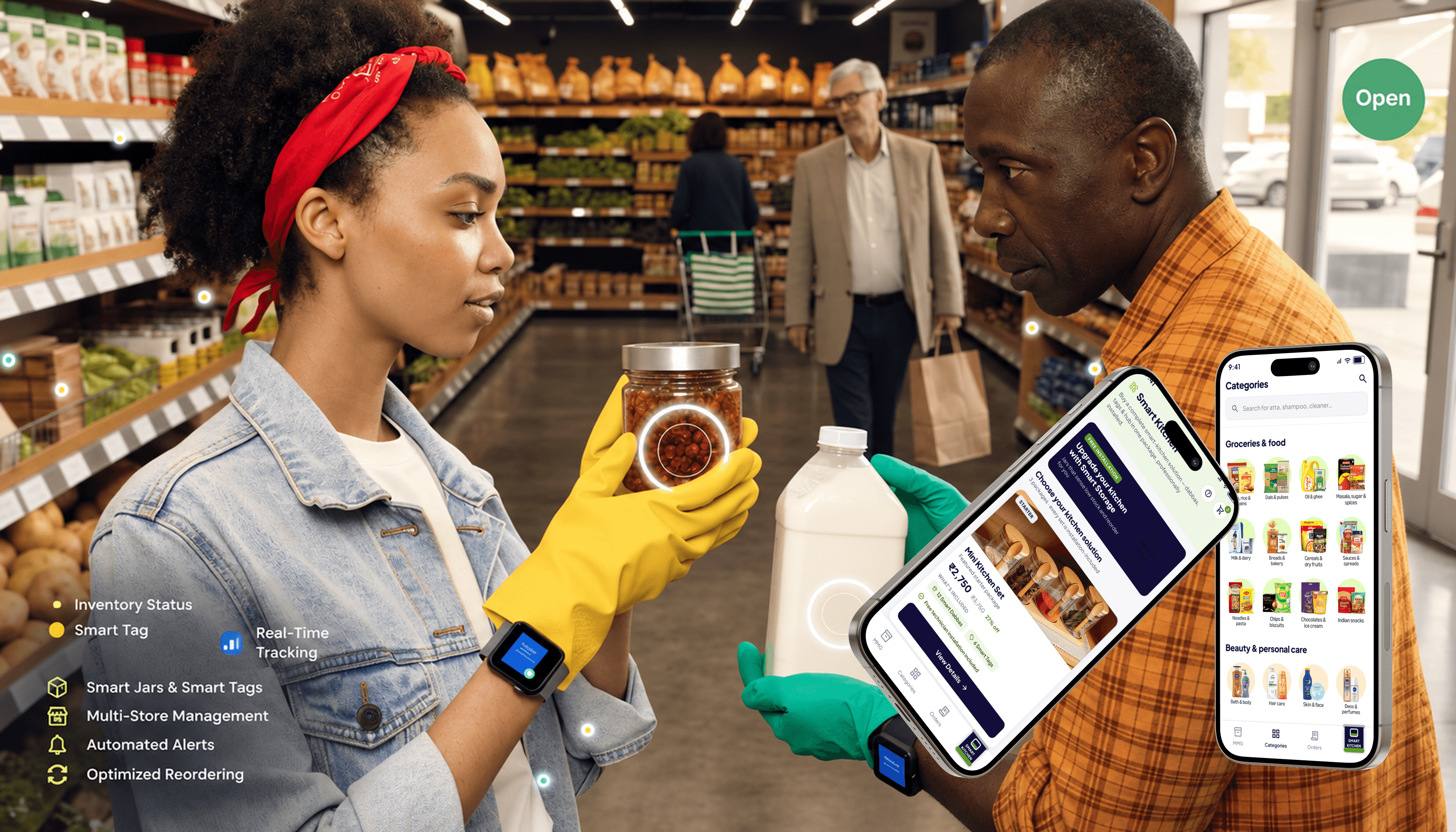
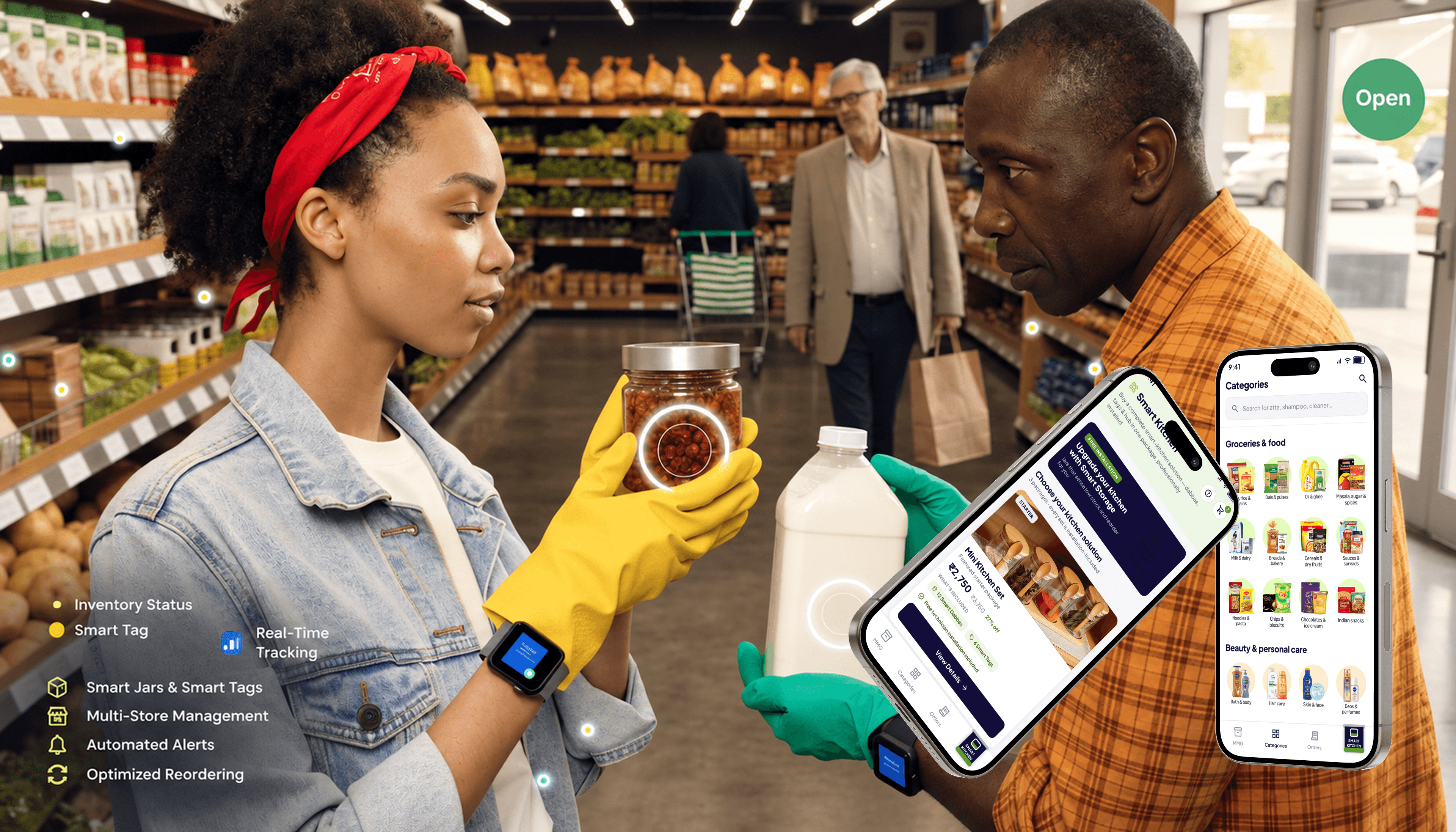
Optimize grocery inventory with AI and IoT Smart Jars & Smart Tags. Monitor stock, automate low-stock alerts, and simplify reordering across stores.
Our client wanted to build a modern smart grocery ecosystem that helps customers manage their household inventory with minimal manual effort while giving grocery retailers complete visibility over inventory, orders, devices, and store operations from a single platform.
The solution combines IoT hardware, mobile applications, and cloud services into one connected ecosystem. Customers can monitor their kitchen inventory through Smart Jars and Smart Tags, receive automatic low-stock notifications, reorder products instantly, and track deliveries in real time. At the same time, store administrators manage multiple stores, inventories, staff members, orders, and reporting through a centralized web-based administration panel.
The objective was to eliminate manual inventory tracking, reduce missed sales caused by stock shortages, simplify grocery replenishment, and create a scalable platform capable of supporting thousands of users, devices, and multiple retail locations.







Most customers manually checked grocery containers before realizing essential products were running low. This often resulted in delayed purchases, forgotten items, and unnecessary emergency shopping trips.
Smart Jars and Smart Tags needed to communicate continuously with the cloud while consuming very little power. The devices also needed to remain reliable even when internet connectivity was temporarily unavailable.
Customer orders needed to be automatically assigned to the nearest eligible grocery store without requiring customers to manually select a location, while ensuring fair distribution of orders across stores.
Inventory levels needed to remain synchronized across in-store purchases, online orders, manual stock adjustments, and IoT-generated reorder events to prevent overselling or inaccurate stock counts.
Since most customers were not technically experienced, onboarding Smart Jars, Smart Tags, and Hubs had to be extremely simple while preventing duplicate registrations or unauthorized devices.
The administration platform needed to support multiple stores, role-based access, inventory management, reporting, and order processing while maintaining centralized visibility for business owners.
To address these challenges, we built the Smart Inventory Platform — an IoT-powered grocery ecosystem that combines Smart Jars, Smart Tags, mobile applications, and a centralized administration platform to automate household inventory tracking and multi-store retail operations.
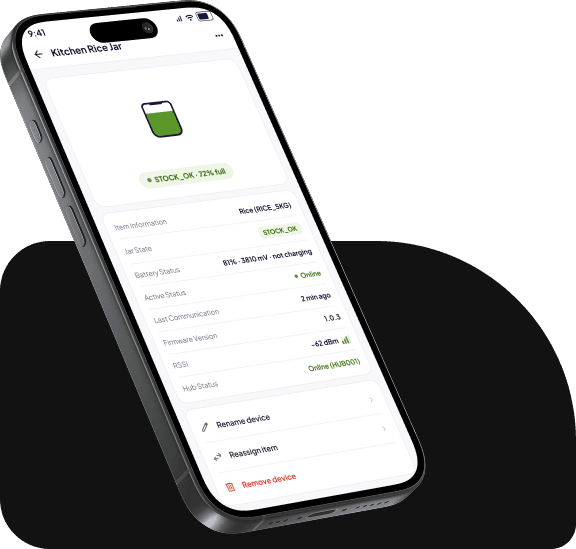
We developed Smart Jar devices equipped with infrared sensors capable of continuously monitoring grocery container levels. Whenever the product level falls below the user-defined threshold, the device automatically detects the change and sends the event to the backend through the Hub.
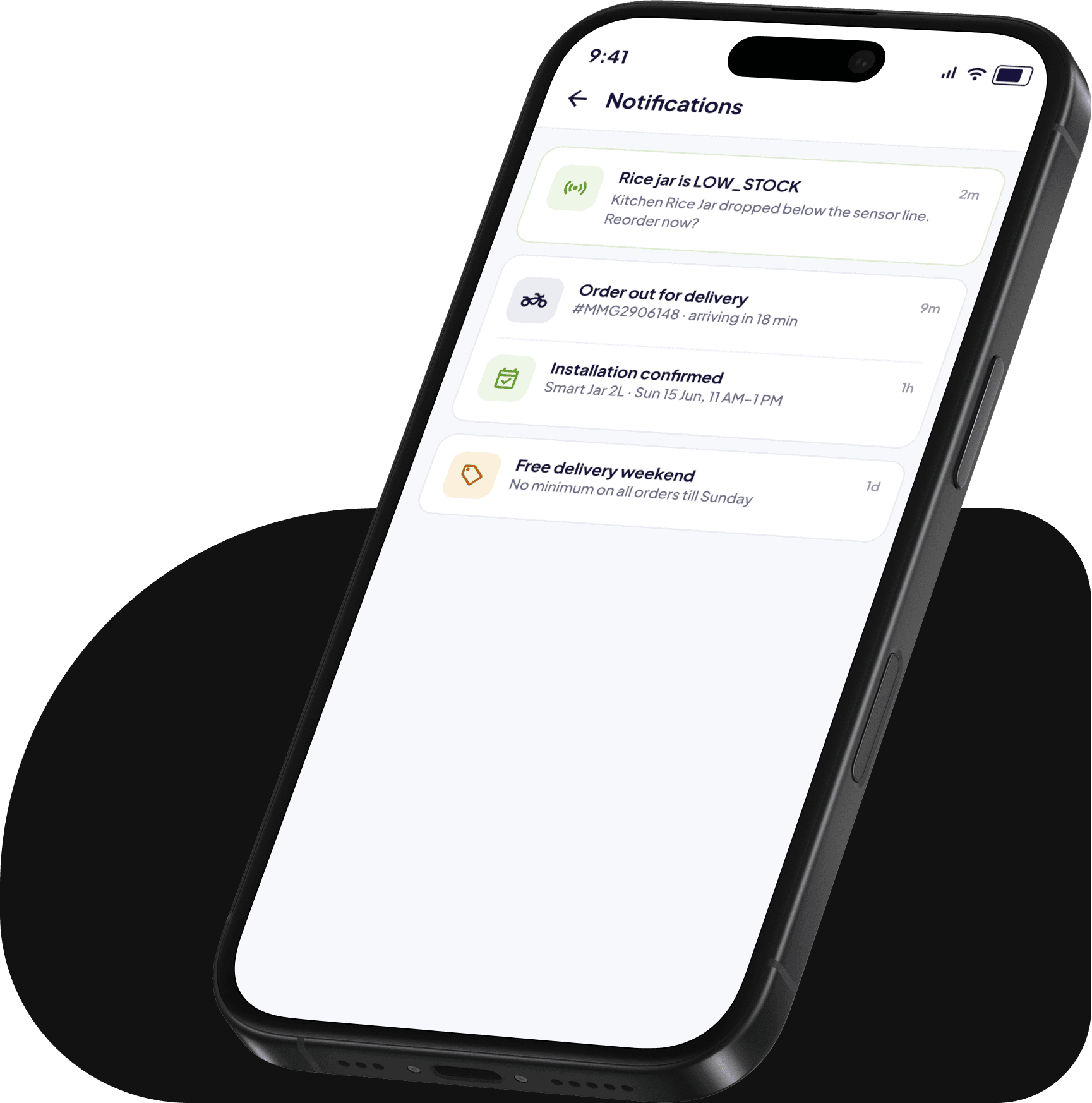
Customers receive instant notifications in the mobile application, allowing them to reorder products before containers become empty. Because threshold values are stored locally on each device, inventory monitoring continues even during temporary internet outages.
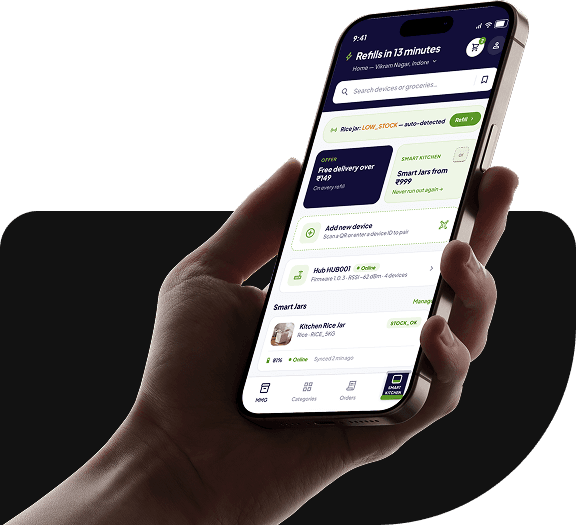
For products that do not require continuous monitoring, Smart Tags provide a simple one-button reordering experience. Customers can attach a Smart Tag near frequently purchased products and reorder them instantly by pressing a physical button without opening the mobile application.
This significantly reduces the effort required for repeat purchases while improving customer convenience.
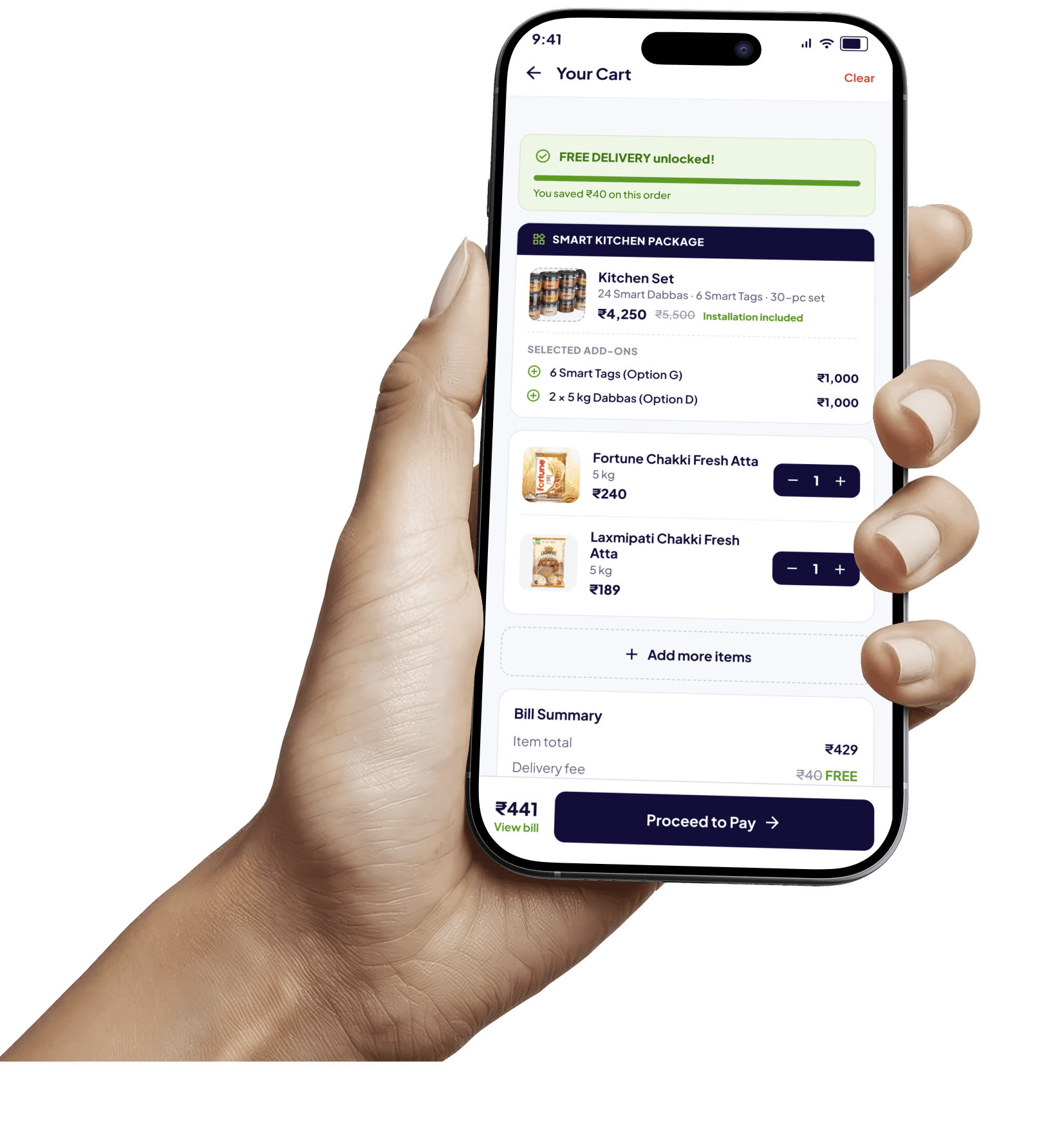
A dedicated Hub acts as the communication bridge between Smart Jars, Smart Tags, and the cloud platform.
Devices communicate with the Hub using Bluetooth Low Energy (BLE), while the Hub securely synchronizes events to the backend using MQTT.
To improve reliability, the Hub temporarily stores events whenever internet connectivity is interrupted and automatically synchronizes them once the connection is restored. This ensures that inventory updates and reorder events are never lost.
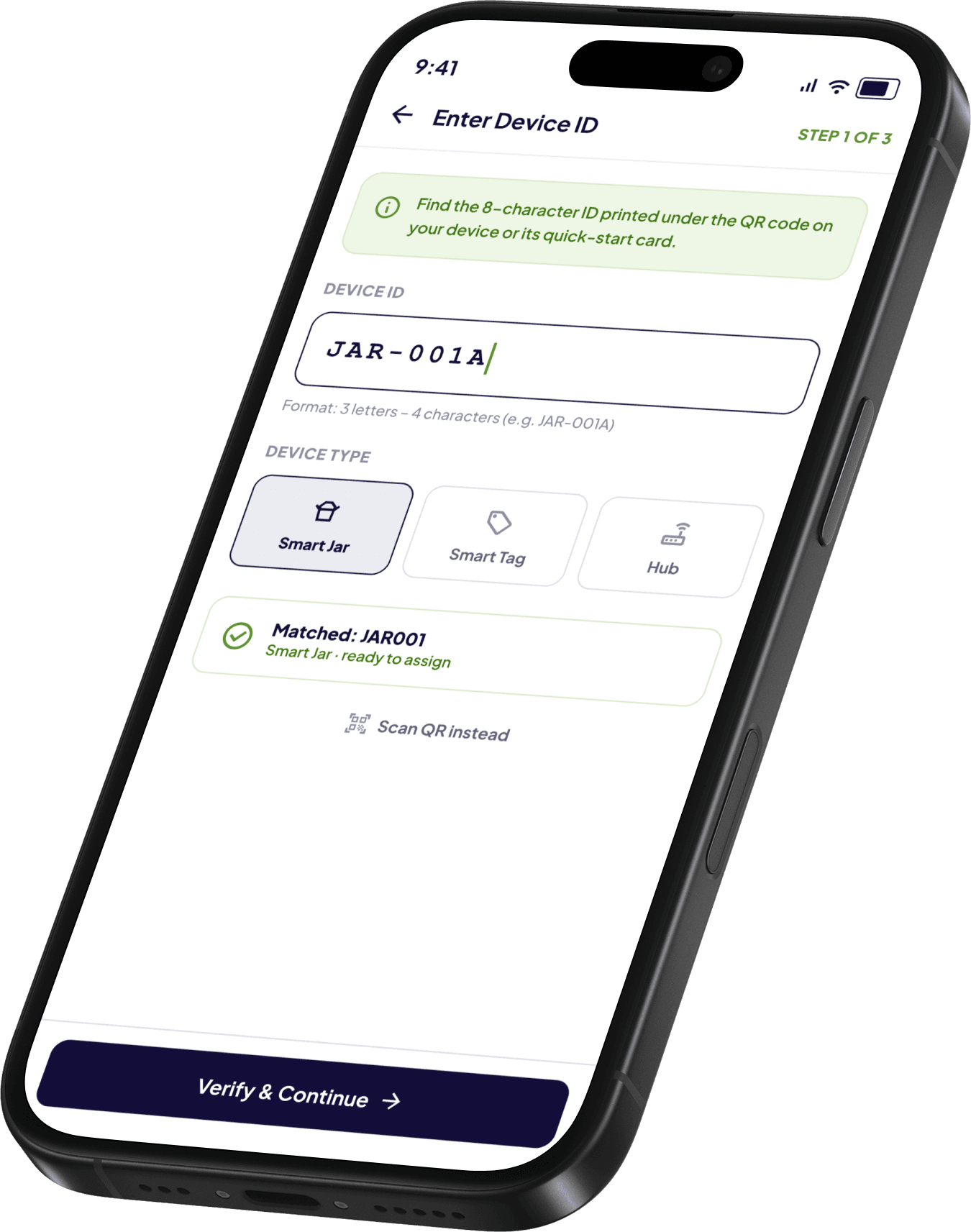
Each IoT device is manufactured with a unique QR code containing its device identifier, serial number, device type, and secure registration token.
During setup, customers simply scan the QR code using the mobile application, assign the device to a product, and complete registration within minutes.
Backend validation ensures every device can only be registered once, preventing duplicate installations and unauthorized access.
The platform delivers instant notifications throughout the customer journey.
Role-based permissions ensure Super Admins, Store Managers, and Store Staff only access features relevant to their responsibilities.
Inventory management is fully integrated across every ordering channel.
This centralized inventory system ensures consistent stock visibility across every store while reducing manual inventory reconciliation.
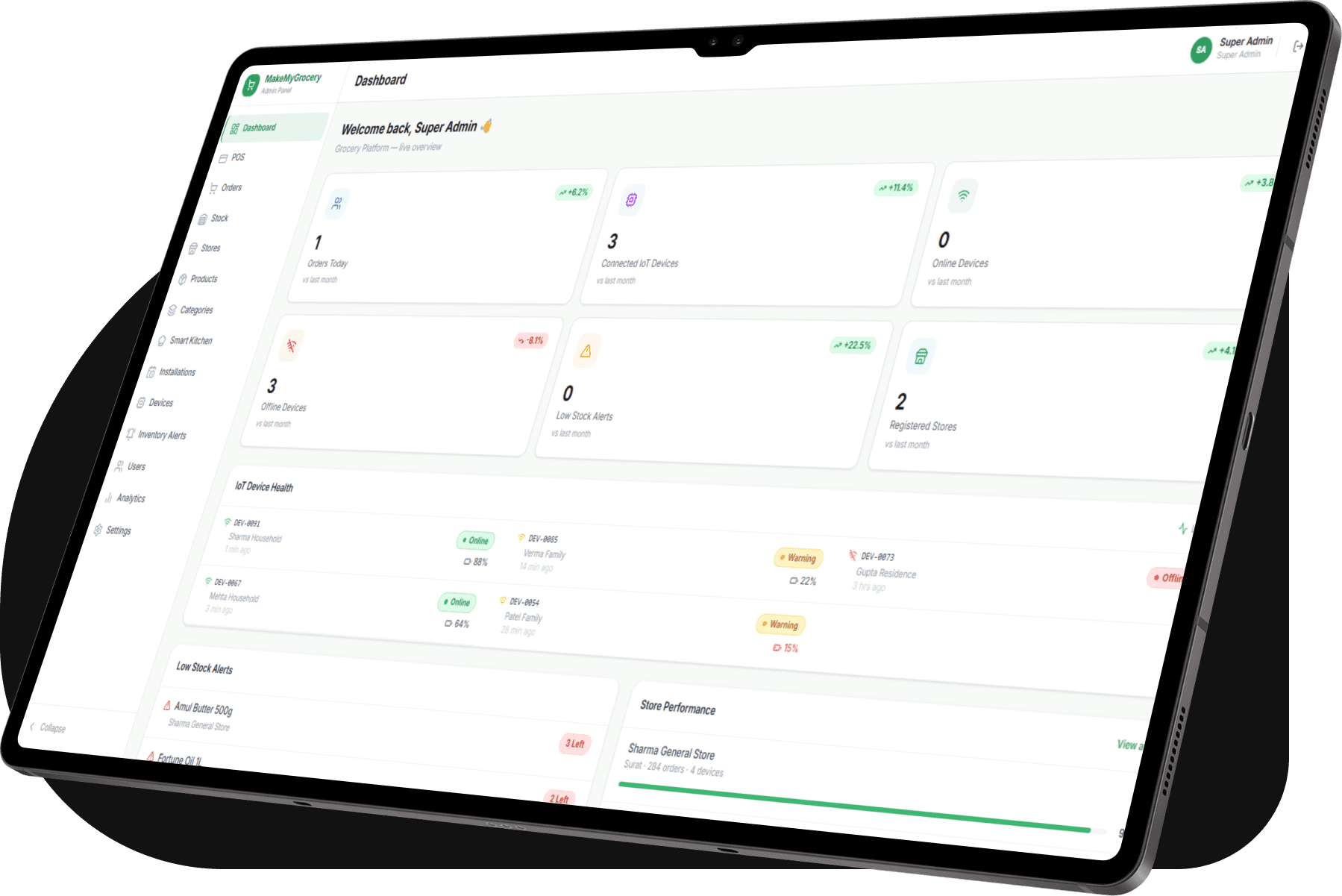
Whenever a customer places an order through the mobile application or an IoT device, the platform automatically identifies nearby stores capable of fulfilling the order.
Orders are initially assigned to the closest available store. If the selected store does not respond within the configured timeout period, the system automatically forwards the order to the next nearest eligible store.
This automated routing minimizes delivery times while balancing workload across multiple retail locations.
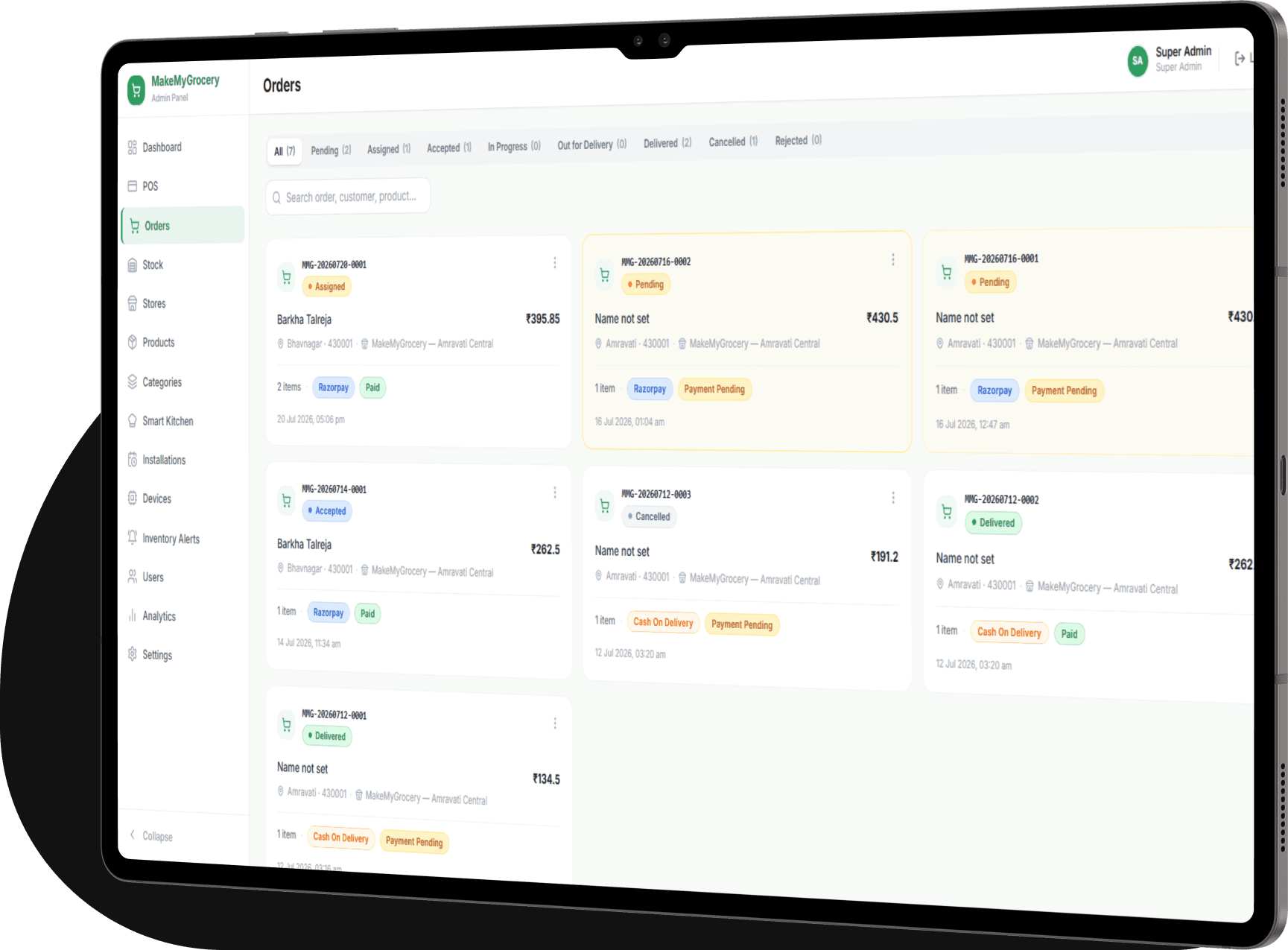
We built a centralized administration portal that enables business owners to manage every aspect of the platform from one dashboard.
Administrators can:
Role-based permissions ensure Super Admins, Store Managers, and Store Staff only access features relevant to their responsibilities.
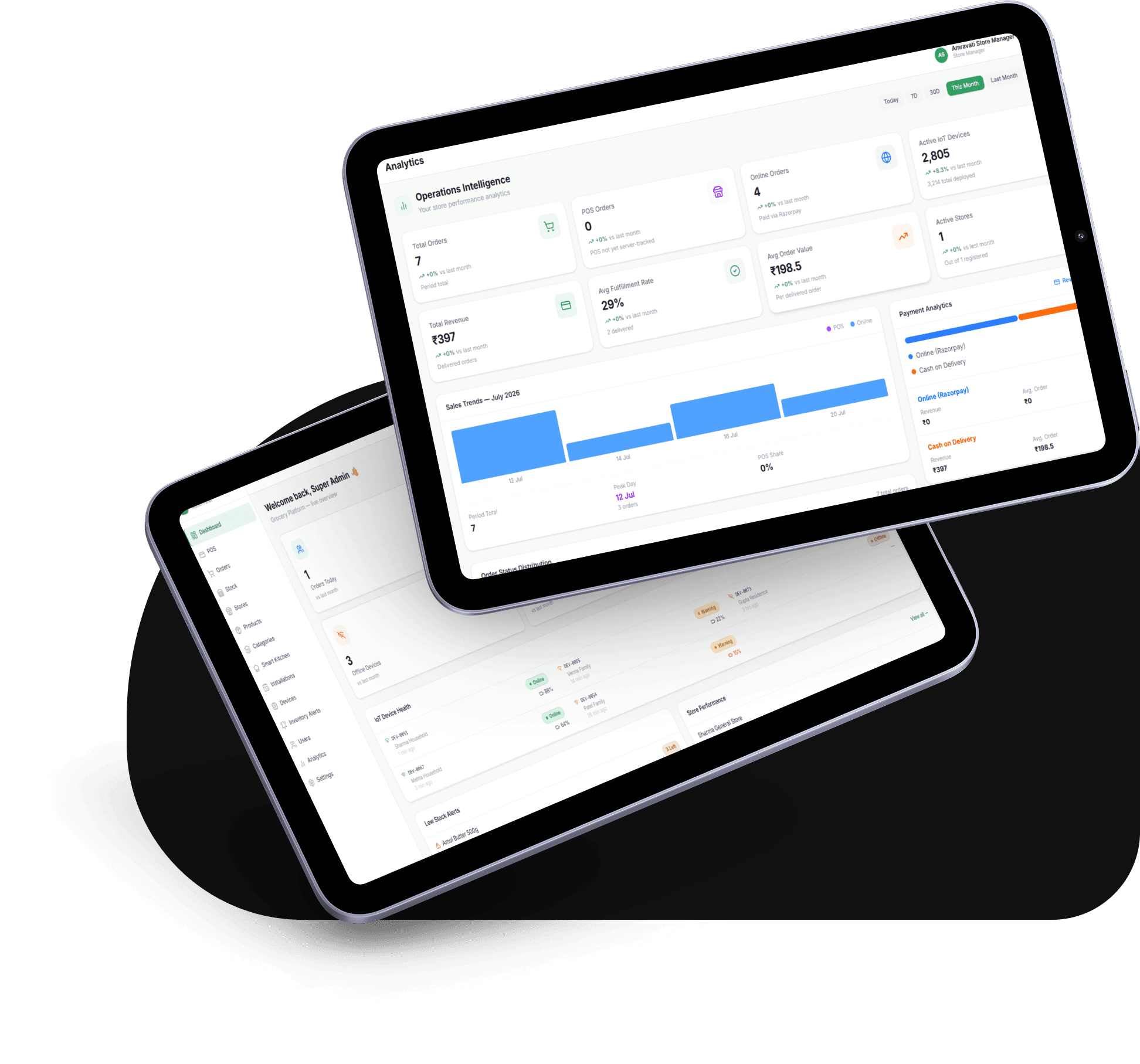
The platform delivers instant notifications throughout the customer journey.
Store staff simultaneously receive notifications for new orders, pending acceptances, and inventory events, enabling faster response times and improved customer service.
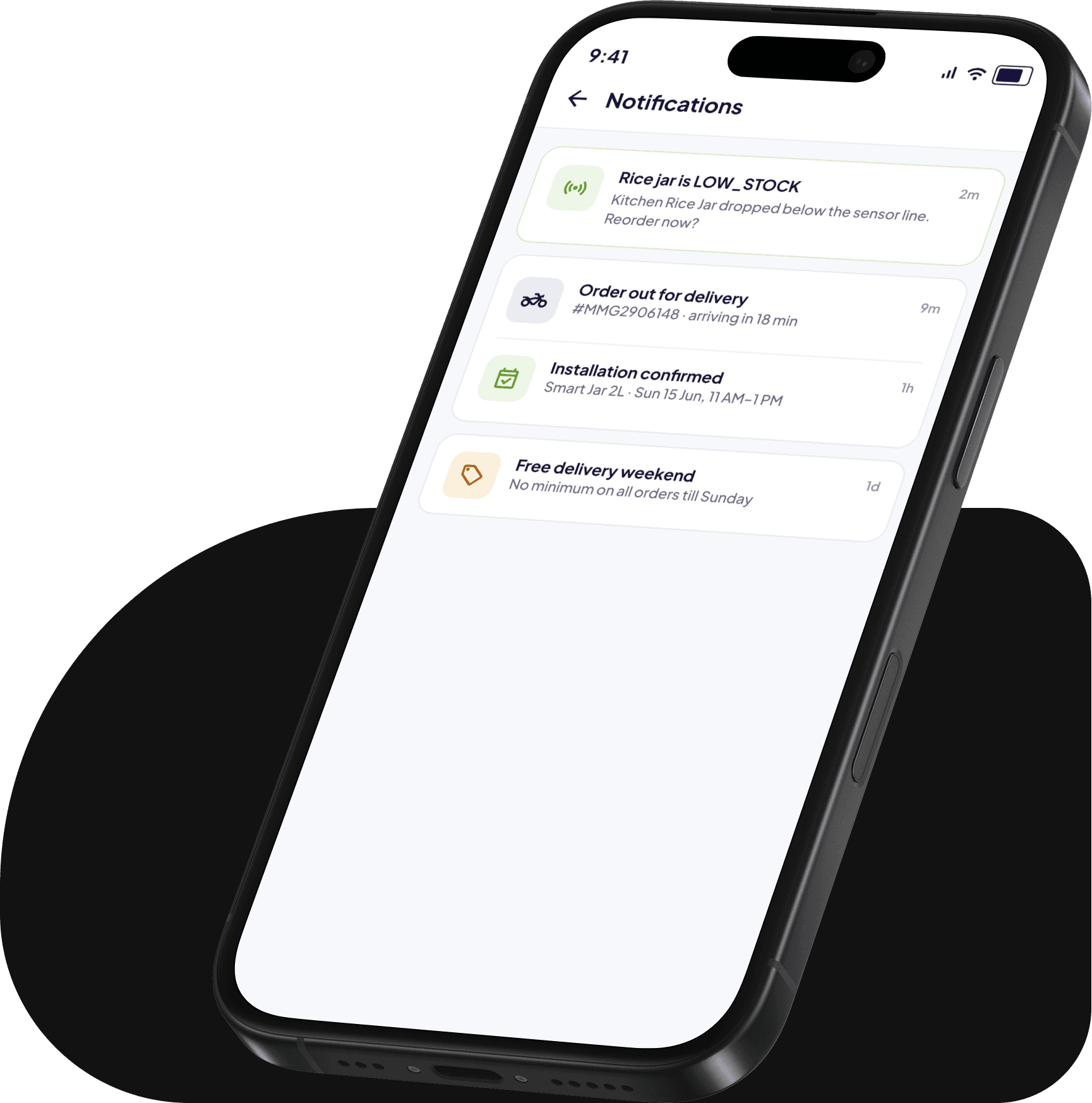
The Smart Inventory Platform significantly improved both customer convenience and retail operations.
Customers no longer need to manually monitor grocery containers, reducing the likelihood of running out of essential household products.
Smart Jars and Smart Tags simplify repeat purchases by automatically generating reorder suggestions or enabling one-touch ordering.
Real-time synchronization across mobile applications, POS systems, and IoT devices ensures inventory remains accurate across every retail location.
Offline event storage within the Hub prevents data loss during internet interruptions while maintaining uninterrupted inventory monitoring.
Automatic order routing distributes orders efficiently across stores, reducing delivery times and minimizing manual intervention.
Retail operators gain complete visibility into stores, inventory, customers, employees, and device health through a unified administration platform.
The platform is designed to support thousands of connected IoT devices, multiple retail stores, and growing customer demand without requiring significant architectural changes.
Explore other projects we've delivered
A multi-warehouse fulfillment platform that automates order routing, optimizes inventory allocation, and streamlines Amazon and Walmart fulfillment.
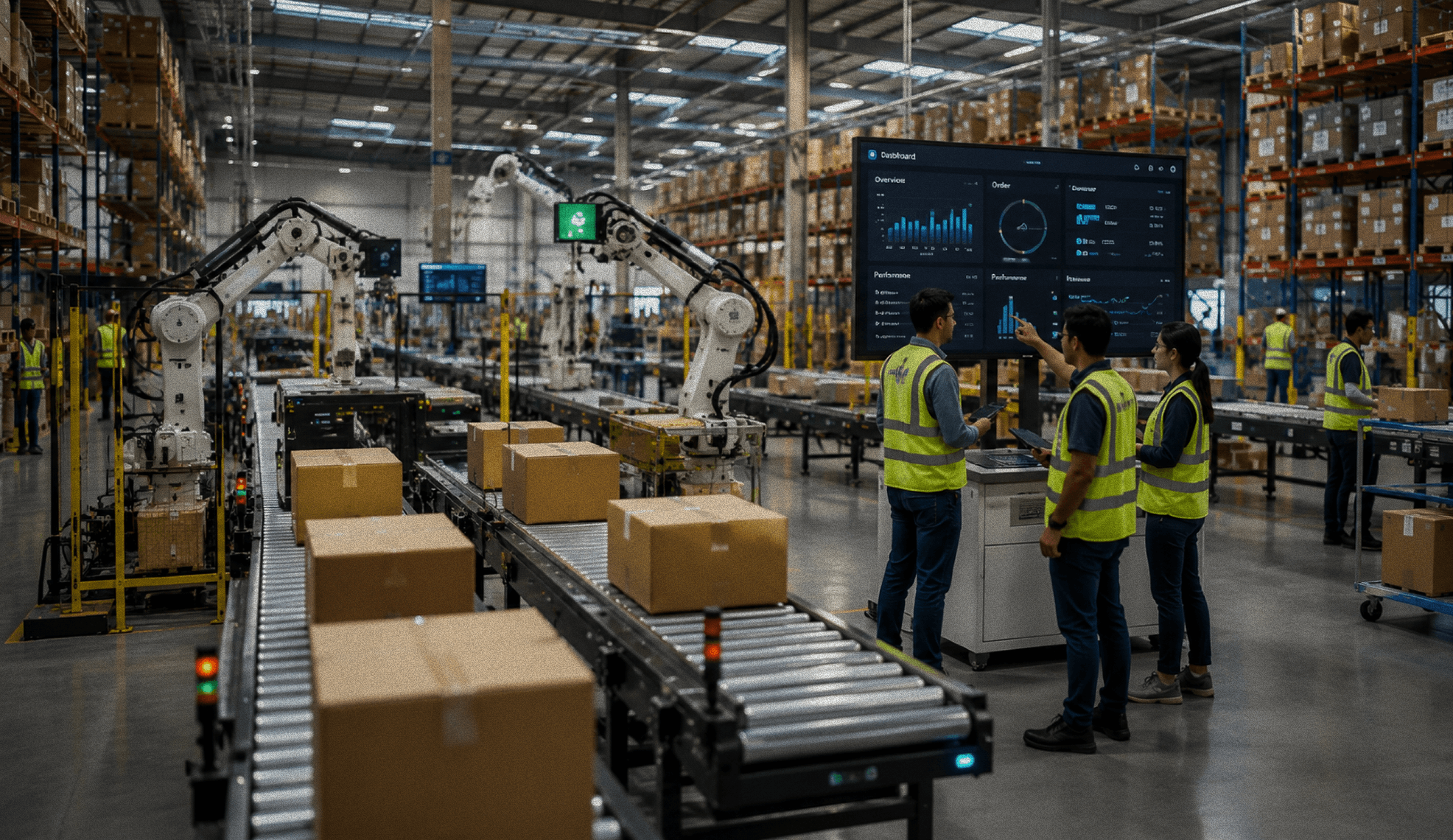
AI conversational assistant for warehouses with real-time order, inventory, and shipment insights, role-based access, and secure read-only data retrieval.

A digital performance management platform that unified manufacturing data, automated reporting, and enabled real-time decision-making.
Monitor · Reorder · Fulfill · Scale
Transform manual inventory tracking and fragmented store operations into one connected, AI-powered retail ecosystem — from smart shelf to doorstep delivery.